
Call for Next Available Appointment. 855-854-2679

Call for Next Available Appointment855-854-2679

Call us to get started 855-854-2679

Guaranteed Squirrel Removal

Fast, Reliable, Guaranteed Wildlife Removal

Fast, Effective Squirrel Removal for Your Home and Business

Hearing scurrying noises in the morning, finding gnaw marks in the attic, or dealing with clumps of insulation and twigs in the attic?

Squirrels are some of the most common animals that live near people. If you find signs of squirrel activity on or in your home, act quickly to safely remove these rodents. Don’t wait for them to leave on their own. Squirrels could stay in your attic up to three months. 

Common squirrel problems can include property damage, health risks, and near-constant noises early in the morning. 


IDENTIFY YOUR SQUIRREL PROBLEM

SQUIRRELS IN THE ATTIC - WHAT ARE YOU HEARING OR SEEING?

These are the most common signs of squirrels in the attic, walls, or roof. Find your symptom to understand what it means and what it means to do next. 

Scratching Sounds in the Attic

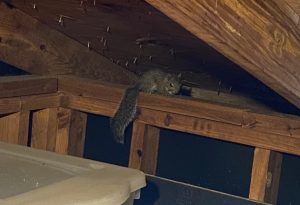
Early-morning or late-afternoon scratching is the most common sign of squirrels in the attic. The sound is rhythmic and quick - claws on wood or insulation. Important: squirrels are active during the day, not at night. If the scratching happens after dark, that points to a different animal, likely raccoons or mice. Daytime attic noise is one of the clearest indicators that squirrels are the problem.
Running or Rolling Sounds

A rolling or thumping sound overhead, often with quick-step movement, indicates a squirrel actively using your attic as a thoroughfare or nesting site. Acorns being cached also produce a distinct rolling sound. Both confirm occupancy and warrant a professional inspection to locate the entry point.

gnawed electrical wires

Damaged Wires

Squirrel teeth never stop growing and they gnaw continuously to manage length. Electrical wiring in attics is a frequent target. Chewed wire insulation in the attic is a documented cause of residential fires. If you have found chewed wiring alongside other signs of squirrel activity, treat this as urgent, have an electrician inspect the attic and call for immediate removal and exclusion.
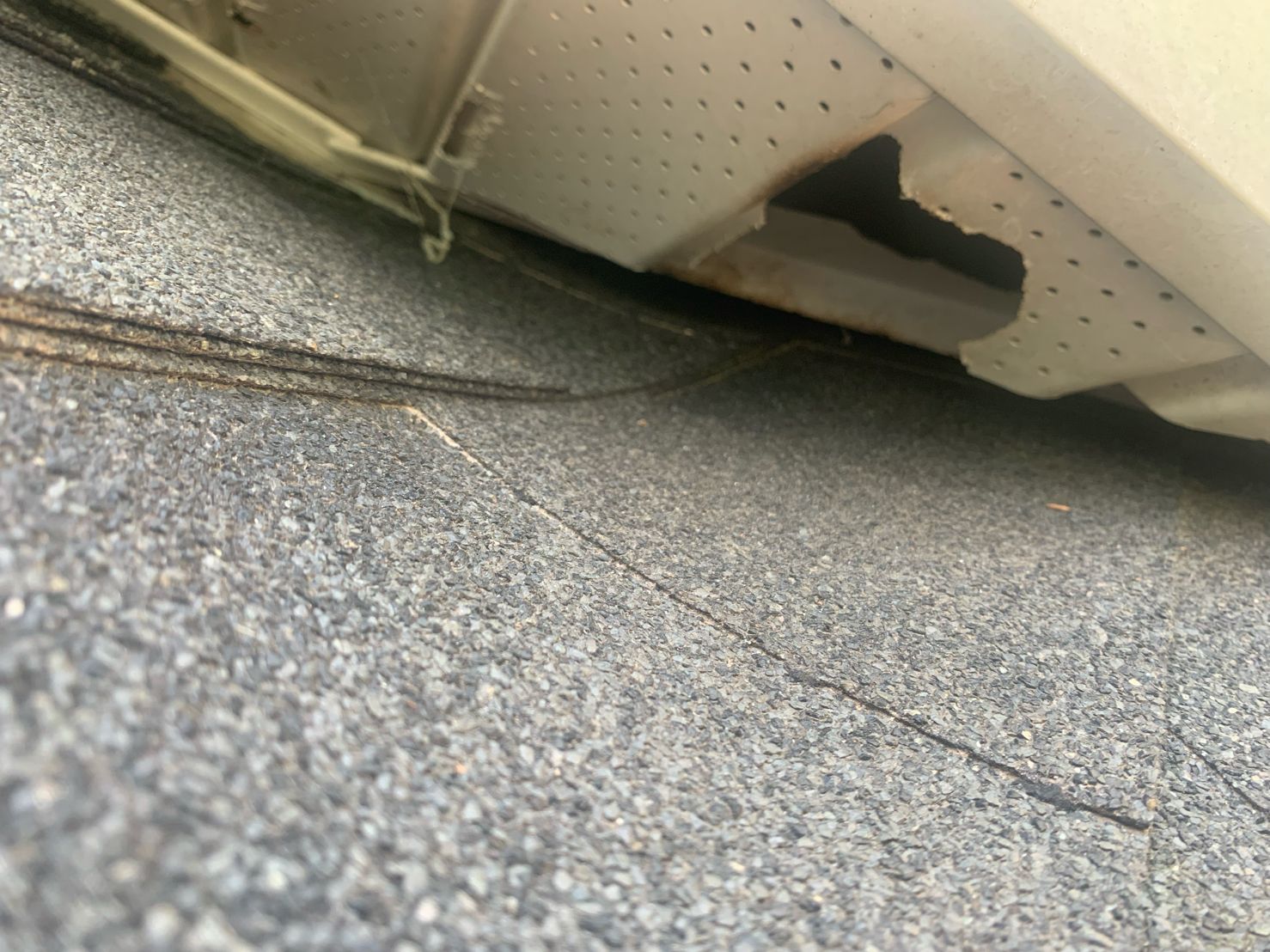
Visibile Soffit or Roof Damage

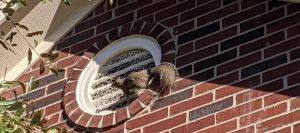
A visible hole or torn section in the soffit, fascia, or roof return is a confirmed entry point. Do not attempt to seal it yourself while an animal may be inside, or you risk trapping them, creating a decomposition problem. Professional exclusion allows animals to exit through a one-way device before permanent sealing closes the gap.
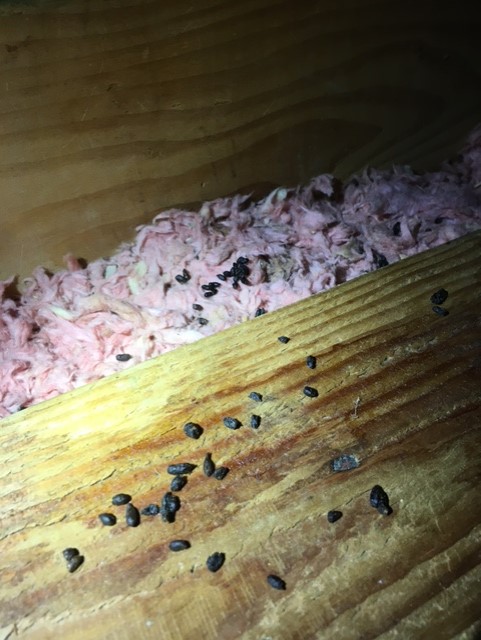
squirrel droppings inside attic

Squirrel Droppings in the Attic

Squirrel teeth never stop growing and they gnaw continuously to manage length. Electrical wiring in attics is a frequent target. Chewed wire insulation in the attic is a documented cause of residential fires. If you have found chewed wiring alongside other signs of squirrel activity, treat this as urgent, have an electrician inspect the attic and call for immediate removal and exclusion.
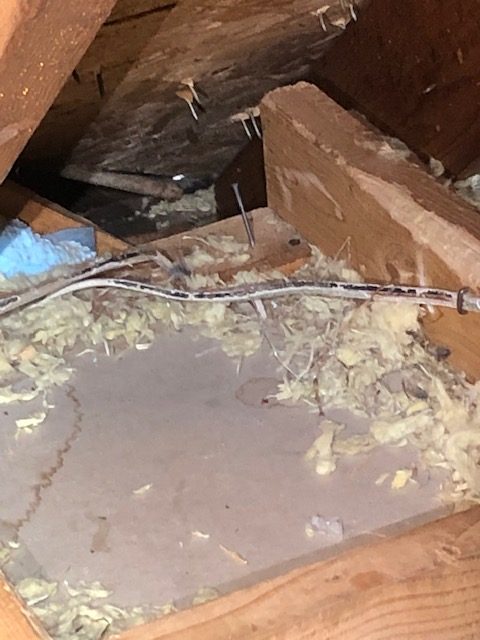
Disturbed or Shredded Insulation

Insulation that has been pulled aside, burrowed into, or shredded into a nest cavity is a clear sign of established squirrel occupancy. A single squirrel family can damage hundreds of square feet of attic insulation. The extent of damage determines whether spot repair or full attic restoration is needed; this is assessed during the inspection and quoted separately.
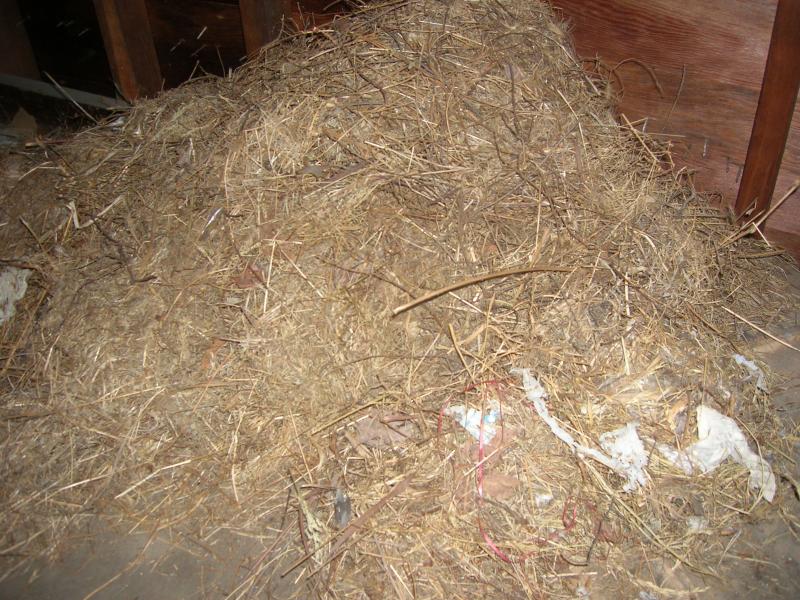
Squirrel Nests

Squirrels build their nests (also called dreys) in shelter locations high above the ground. It is not uncommon for squirrels, especially adult females, to build nests in attics. Inside an attic squirrels can build a nest with shredded paper, cardboard, fabric and bits of insulation. If you come across a squirrel nest in your attic, do not approach. Squirrels are wild animals and can be dangerous.
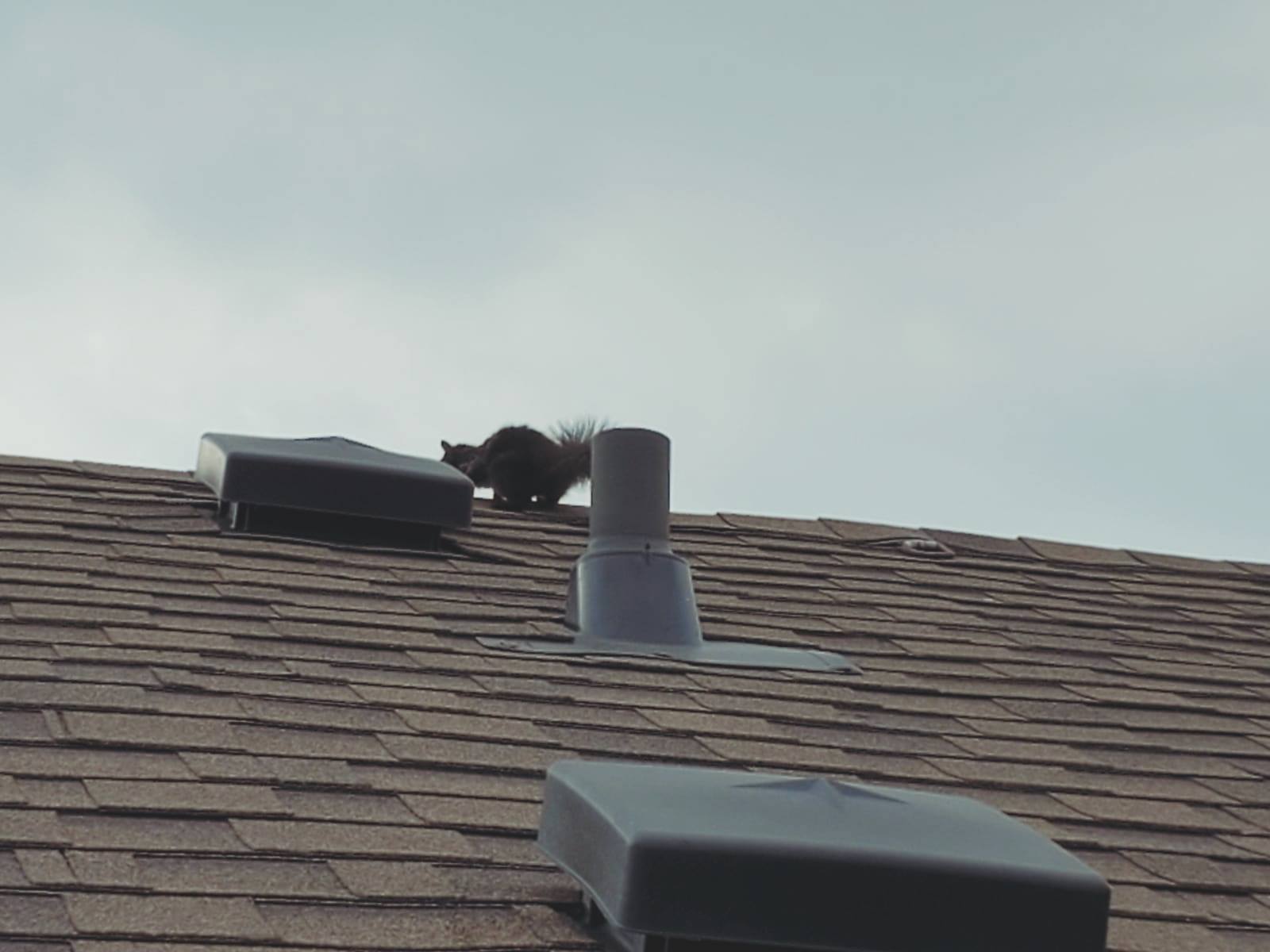
Squirrels on the Roof

Squirrels repeatedly investigating the soffit edge, roof returns, or eave joints are actively looking for or already using an entry point. This is your window to act before they establish themselves. A perimeter inspection at this stage, before entry, is far less expensive than removal, exclusion, and cleanup after an infestation is established.

CONFIRM WHAT YOU'RE DEALING WITH

Signs of a Squirrel Problem

Squirrels may be small but they leave clear signs of their presence and can cause serious problems.

Squirrel noises in attics or walls

Squirrels make chirps, squeaks, and barks. You will usually hear them early in the morning. You will also hear squirrels moving in your attic. If you hear sounds like scurrying, rustling, running, scratching, or rolling in the morning, those are probably squirrels.

You’ll often see small paw prints in dusty areas or on exposed surfaces. Squirrels have four toes on their front feet and five on their back feet, though the prints may not always be perfectly clear. The tracks are typically paired and close together, reflecting their bounding movement—front feet land first, followed by the back feet slightly ahead.
In insulation, squirrels leave compressed pathways or “runways.” These look like narrow, slightly sunken trails where the animal repeatedly travels between entry points and nesting areas. Over time, these paths become more defined and may appear as straight or slightly curved lines across the attic floor.

Squirrel feces look like small, dark pellets, 3/8 inch long and only 1/8 of an inch in diameter. Droppings can be found in scattered piles throughout the attic (rats and mice leave a trail of droppings). 

Squirrels will damage the insulation by creating nests, traveling through it, and defecating. All of these acts will degrade the quality of your insulation and reduce its effectiveness. That will make it more expensive, but it keeps your house cool in the summer and warm in the winter. 

Squirrel damage to insulation, frayed wires.

Squirrel damage to the exterior of your house usually comes from gnawing. Squirrels will use their sharp incisors to gnaw larger gaps along the roofline, in soffits, on shingles, and on roof and attic vents. 

Squirrel damage hole in Charlttoe
Large squirrel hole in roof.

There are a few other, less apparent signs of squirrels. Squirrel droppings and urine will create a strong musk smell in your attic. 

Squirrels will leave smudge marks where they rub on your wall. This is most evidence at entry gaps or holes. 

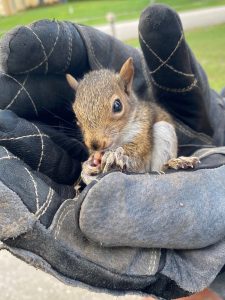
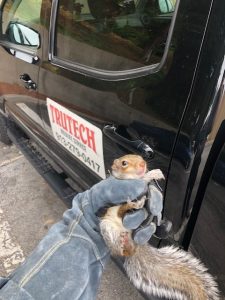
Squirrel in a technician's hands

UNDERSTANDING THE PROBLEM

WHY DO SQUIRRELS ENTER MY HOME?

During the spring and fall, female squirrels are looking for safe places to give birth. During colder parts of the year, they can also seek warm shelter.

    • Bird seeds & nuts
      Easy food sources attract squirrels to your property.
    • Attic & chimney shelter
      Squirrels prefer warm, safe nesting sites, especially during maternity season.
    • Gaps & weak entry points
      Squirrels squeeze through vents, crawl spaces, soffits, eaves, and roofing gaps.

The joint where the soffit meets the fascia is the most common entry point on homes. 

Where the roof meets a wall or dormer, gaps develop over time and are often exploited. 

Ridge vents, gable vents, attic vents are usually made of plastic, and squirrels can gnaw through them. 

Spring is Maternity Season

Pregnant females actively seek enclosed, dark, and elevated spaces for their young. Spring attic intrusions frequently involve a litter, which changes the removal approach.

Warmth and Shelter

Attics retain heat in the winter. A small gap near a roofline is all it takes to convert your insulation into a nesting site.

Tree Access to My Roof

Branches overhanging or touching the roofline are the primary access route.

WHY YOU SHOULDN'T WAIT

THE REAL COST OF A SQUIRREL INFESTATION

ELECTRICAL FIRE RISK

Squirrels gnaw through wire insulation to manage tooth growth. Exposed wiring in attic spaces is a documented cause of residential fires. This is the  highest-risk consequence of an unhandled squirrel infestation.

INSULATION DESCTRUCTION

Nesting, burrowing, and contamination from urine
and feces degrades insulation value rapidly. Attic
restoration after a squirrel infestation often runs
$2,000 to $8,000, depending on severity.


STRUCTURAL DAMAGE

Continuous gnawing on wooden beams, fascia boards, and roof sheathing compromises structural integrity over time. Entry points also allow water intrusion.

HEALTH & CONTAMINATION

Squirrel droppings and urine harbor leptospirosis, salmonella, and parasites. Fecal matter accumulates in insulation and becomes airborne when disturbed. Professional cleanup

MATERNITY SEASON COMPLICATIONS

A female with a litter cannot simply be excluded – the babies will die inside and create a
decomposition problem. Spring intrusions require a different, more careful approach.

ESCALTING ENTRY

Unsealed entry points attract other squirrels once the original animal is removed. Without
exclusion, re-infestation typically occurs within one season. 

Squirrel Control Services

Fast & Effective

Most customers can schedule same-day or next-day service. 

Humane and Safe

All of our technicians are licensed and certified to legally and safely remove squirrels from your home. 

Long-term squirrel prevention

Our exclusion services block all current and potential squirrel entry points, preventing them from getting back inside. 

How We Get Rid of Squirrels

Why Chose Trutech Wildlife Service

100% Money Guarantee

We stand by our work with a 100% Money-Back Guarantee. If you are not completely satisfied with the results of our work, we will provide a full refund. No questions asked. 

Free Inspection

Schedule a free inspection for squirrel removal services. Our inspection covers the entire house, from the roof to the basement. Each inspection includes a no-obligation proposal with no hidden fees and transparent pricing.

In-House Financing Options

Nobody plans for a squirrel problem in their house. Worry about one less thing and take advantage of our in-house financing options.

Both standard and 90-day same-as-cash financing options offer 12-, 18-, 24-, or 36-month terms. S

FAQ Squirrel Removal

How do I know if I have squirrels in my attic?

Common signs of squirrels in your attic include scratching, scurrying, and gnawing sounds, especially in the early morning. You may also notice damaged soffits, roof openings, disturbed insulation, droppings, or nesting materials. Squirrels can enter through small gaps along rooflines, soffits, vents, and areas where dormers meet the roof. A professional inspection from Trutech Wildlife Service can help identify the animal, locate entry points, and assess any damage to your home.

How do you get rid of squirrels in the attic?

The best way to remove squirrels depends on where they are nesting, how they enter your home, and whether young squirrels may be present. At Trutech Wildlife Service, we begin with an inspection to identify squirrel activity and potential entry points. Depending on the situation, our technicians may use traps or one-way exclusion doors that allow squirrels to leave without returning. Once the animals are safely removed, we can recommend exclusion repairs to help prevent future entry.

How much does squirrel removal cost?

The cost of squirrel removal depends on several factors, including the number of squirrels, their location, the difficulty of accessing the affected area, and the extent of any damage. At Trutech Wildlife Service, we provide a customized estimate following an inspection. Your proposal may include squirrel removal, sealing entry points, and repairing damage to insulation or other parts of your home. We explain the recommended work and its cost before work begins, so you can understand your options.

Can squirrels damage my home?

Yes. Squirrels can cause significant damage when they enter attics, crawl spaces, or other parts of a home. Their chewing can damage electrical wiring, wood, roof materials, and insulation. They may also leave droppings, urine, and nesting materials behind. These problems can become more expensive to address if squirrel activity continues. Trutech Wildlife Service can inspect the affected areas, remove the animals, and recommend appropriate repairs, cleanup, and exclusion measures to help protect your property.

Will squirrels come back after removal?

Squirrels may return if the openings they used to enter your home remain accessible. Even if the original animals are gone, other squirrels can discover the same gaps. That’s why long-term squirrel control involves more than removal. Trutech Wildlife Service identifies vulnerable areas and recommends durable exclusion repairs to help prevent reentry. We can also suggest practical prevention steps, such as trimming branches near the roof and reducing access to food sources around your home.

Is professional squirrel removal humane and safe?

Professional squirrel removal can help protect your family, your home, and the animals. The appropriate method depends on the situation, the animals’ location, and applicable wildlife regulations. Trutech Wildlife Service uses removal methods tailored to the problem, which may include trapping, direct capture, or one-way exclusion devices. Our technicians assess the situation before recommending a solution. We also consider whether young squirrels may be present, since sealing an entry point too early can leave animals trapped inside.

How can I keep squirrels out of my attic?

The most effective long-term approach is to identify and secure the openings squirrels use to enter your home. Squirrels can chew through vulnerable building materials, so repairs should use durable materials appropriate for the location. To reduce the likelihood of another squirrel problem:
  • Seal suitable entry points around soffits, rooflines, and vents after confirming animals are out.
  • Trim tree branches that provide easy access to the roof.
  • Secure bird feeders and reduce accessible food sources.
  • Inspect your roof and exterior periodically for damage or new gaps.
Trutech Wildlife Service can inspect your home and recommend an exclusion plan designed to reduce the risk of future wildlife intrusions.

Does Trutech Wildlife Service repair damage and clean up after squirrel removal?

Yes. In addition to wildlife removal, Trutech Wildlife Service offers animal damage repair and restoration services for affected areas. Depending on your home’s condition, recommended services may include removing contaminated materials and nesting debris, cleaning and deodorizing affected areas, replacing damaged insulation, and repairing openings squirrels used to enter. Addressing both the animals and the damage they leave behind helps restore your home and reduce the likelihood of another intrusion.

At Trutech Wildlife Service, we pride ourselves on offering humane squirrel removal services that prioritize the safety of you and your family, your property, and the animal.

Our team of experienced and certified technicians uses humane and eco-friendly methods to ensure a safe and effective removal process. We provide a comprehensive service that includes thorough inspection, humane removal, meticulous damage repair, and proactive prevention measures.

When you choose Trutech Wildlife Service, you can trust that we will handle your squirrel problem with the utmost professionalism and care, giving you peace of mind and a squirrel -free home. Contact us today for a free quote and let us help you reclaim your space.

Find Squirrel Removal Near You

The owner of this website has made a commitment to accessibility and inclusion, please report any problems that you encounter using the contact form on this website. This site uses the WP ADA Compliance Check plugin to enhance accessibility.

Thank you for subscribing! We'll be in touch.