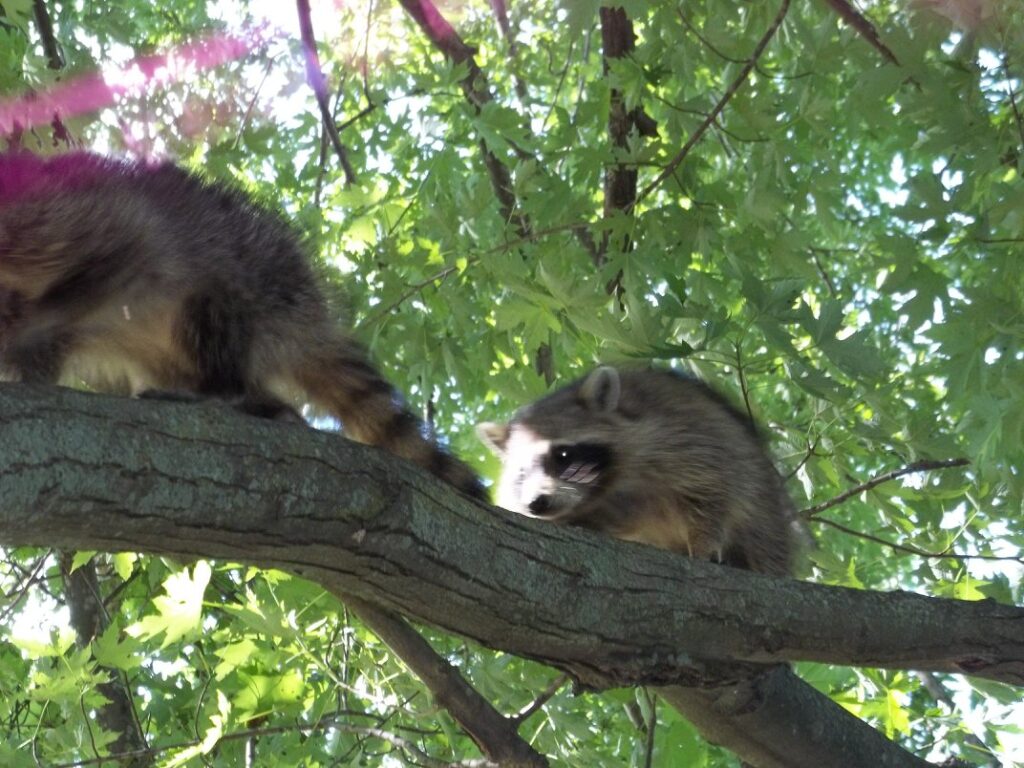
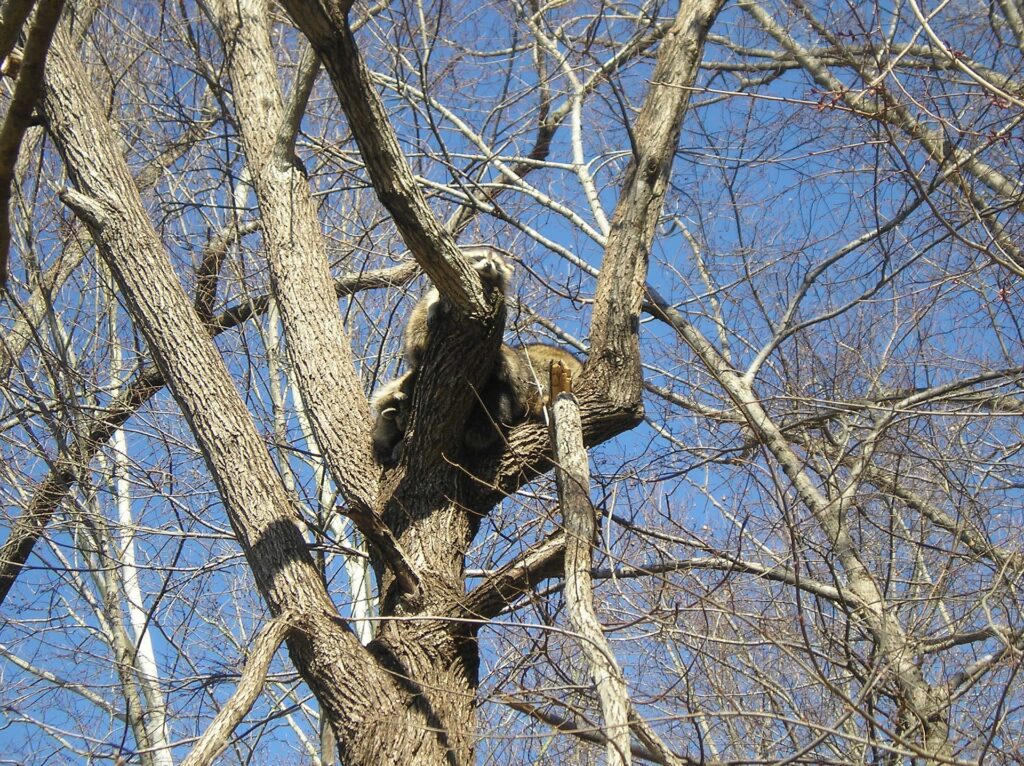
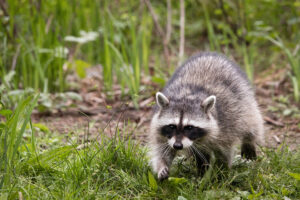
Raccoons possess a specialized physical build that gives them an advantage over other suburban wildlife. Their bodies are built for vertical movement, grip strength, and agility.
Dexterous Front Paws and Sharp, Non-Retractable Claws
A raccoon’s front paws look and function much like human hands. They have five long, flexible digits that can grasp, pull, and manipulate objects.
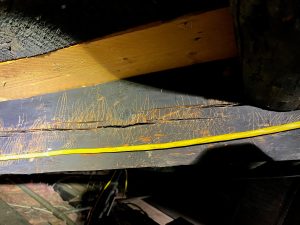
Their claws are curved, thick, and non-retractable. Unlike cat claws, raccoon claws do not retract into the paw. They stay exposed at all times, acting like built-in climbing spikes.
These claws dig directly into wood, bark, mortar, and vinyl. They provide continuous traction as the animal pulls its body weight upward.
Rotating Hind Feet for Head-First Descents
Raccoons share a rare physical trait with tree squirrels. Their hind feet can rotate a full 180 degrees.
This rotation allows their rear claws to point backward. When a raccoon climbs down a structure, it does not have to back down blindly. It can run head-first down a tree trunk or wall.
“The ability to reverse their rear foot orientation gives raccoons absolute stability during vertical descents,” says wildlife biologist Marcus Vance. “They maintain four points of contact even when moving straight down a structure.”
Strong Musculature and Balance
Raccoons have dense, powerful muscles in their shoulders and hindquarters. An adult raccoon can weigh between 10 and 30 pounds, yet its leg muscles can easily propel that mass straight up a wall.
They also use their thick tails to maintain equilibrium. The tail acts as a counterbalance when the animal moves along narrow ridges, roof peaks, and thin branches.