

Mice are some of the most common and destructive pests. They reproduce rapidly, so if you find evidence of one mouse, there’s an excellent chance you have a whole mouse colony inside.
What Does a Mouse Nest Look Like?
House mice use a wider variety of materials for their nests, creating a round ball between four and six inches in diameter. The nest may not be as tightly woven as a rat nest. Nesting material may include wood chips, pellets, vinyl, plastic, papers, carpet, cardboard boxes, drywall, and insulation.
Mouse nest in chimney
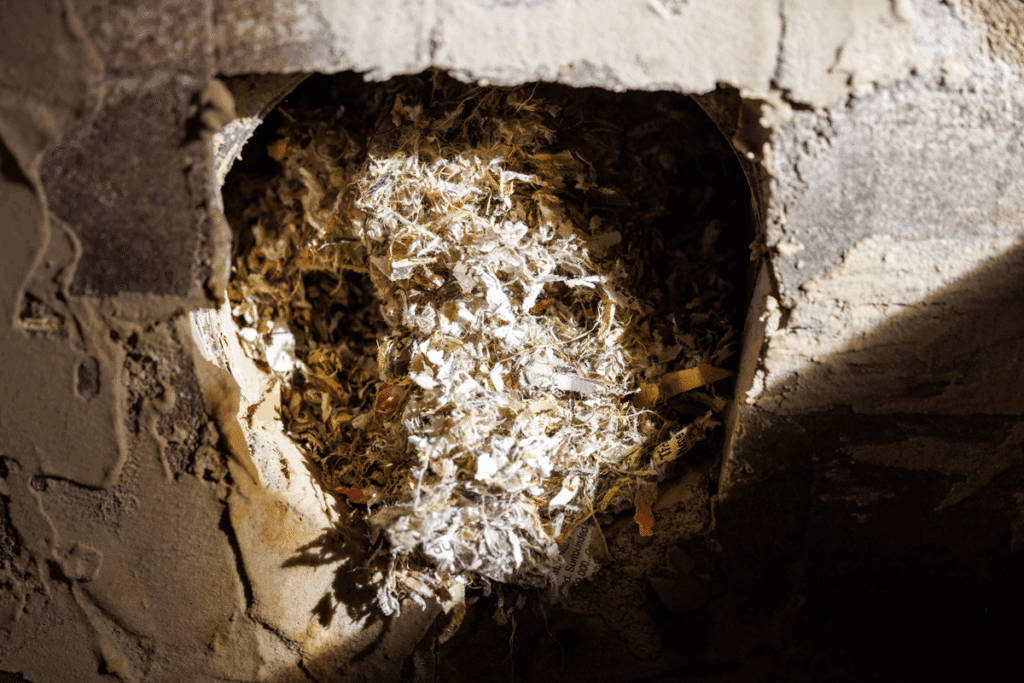
Materials
Shaved wood from trees and branches
Round ball around 4 inches in size
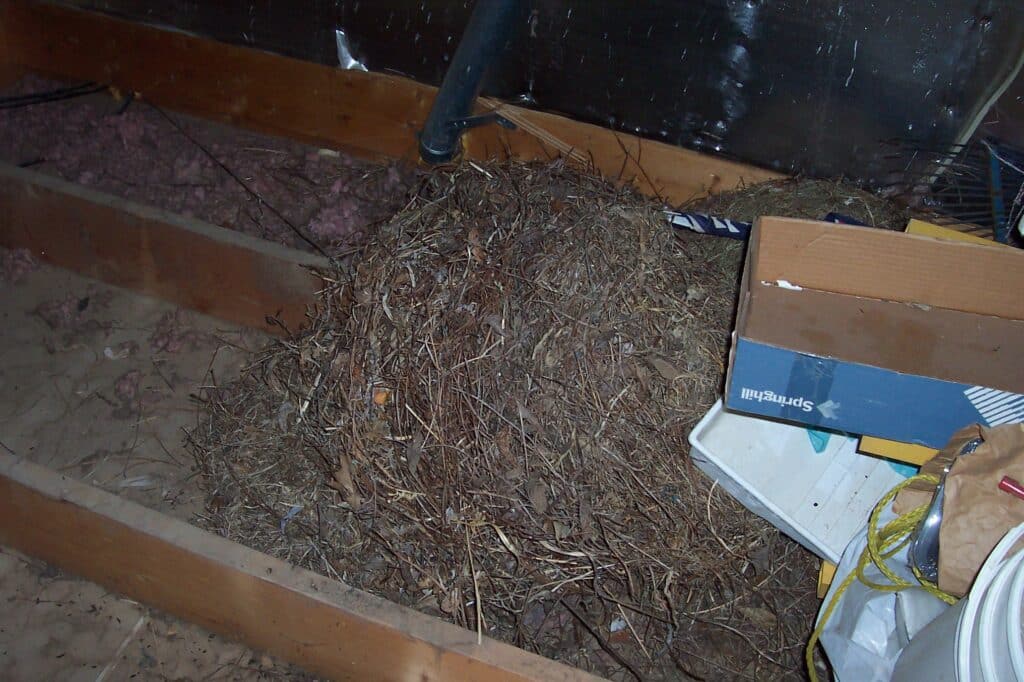
Materials
Straw, grass, and leaves brought inside.
- Attics
- Walls
- Crawl Spaces
- Kitchen Cabinets & Pantry
- Closets
- Garages
- Behind Major Appliances
- Hoods of Vehicles
How to Find a Mouse Nest
Finding a house mouse’s nest means following urine, feces, trails, gnaw marks on walls, floors, and cabinets, and rub marks along baseboards. If you notice wood shavings or small piles of materials, they could be items a mouse dropped on its way back to a nest. House mice usually leave obvious signs of food contamination near the items they destroy, such as crumbs and droppings.
House mice will build nests near food sources but they rarely travel more than 30 feet from their nests. They will travel in all directions, claiming all the territory within the circle. This behavior does not make them easier to trap, however. Also, house mice leave their nests about 40 times daily in search of food and water. Mice live in colonies, and you may have one or two dozen living in the same area.
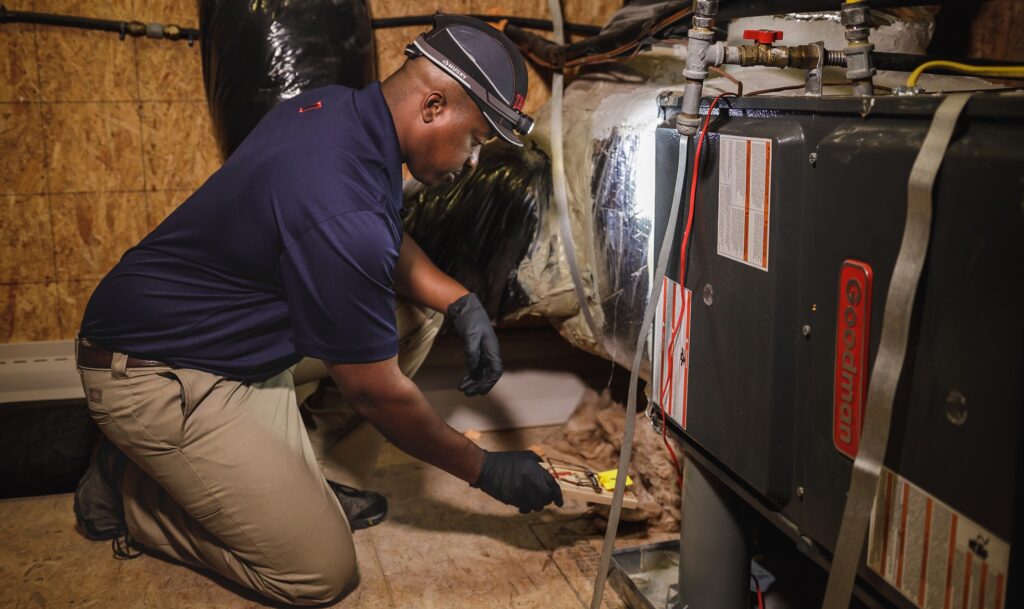
When getting rid of a rodent’s nest, your first instinct may be to pick it up, shake it apart, or dump it in the garbage can. Ignore this instinct. Mice carry diseases such as Hantavirus and can pass them on to humans through direct and indirect contact. You may get bitten if you reach for a nest and a mouse is in it. Rodent nests are also filled with feces, urine, and parasites. Touching a nest without protection puts you at risk of encountering mold spores, bacteria, fleas, and ticks, among other unsavory encounters.
Simply removing the nest or trying to trap the mice will not provide long-term mouse control. You need to get rid of the mice in the house, prevent other mice from getting inside your home, sanitize the areas contaminated by mice, and control the population outside so they can’t get inside.
These experts at Trutech will perform extensive inspections, use the correct baits and traps, and implement exclusions to block mice entry points. Most importantly, they have the right tools and equipment to safely remove and sanitize the nest area.