

The easiest way to figure out what animal is ruining your lawn is by checking the diameter of the hole, the depth, and the shape of any dirt mounds left behind:
Molehills: Circular, volcano-shaped mounds from the side, accompanied by raised tunnel tracks across the grass.
Groundhog Mounds: Large, crescent-shaped dirt mounds located near structures like trees or fences, with entrance holes up to 10 to 12 inches wide.
Gopher Mounds: Horseshoe- or crescent-shaped mounds with a plugged center hole.
Voles: Leave tiny entrances (sometimes the size of a dime) connected by clear pathways or “runways” of worn-down grass.
Other Animals: The page also highlights characteristics for prairie dogs, armadillos, chipmunks, ground squirrels, skunks, foxes, and rabbits.
Finding a hole in your lawn is often the first sign of an underground invasion. You may notice small, clean-cut circles in the turf, large mounds of excavated soil, or areas where the grass feels spongy underfoot. Ignoring these signs can lead to extensive property damage. To resolve the issue, you must first determine exactly which species is responsible for the disruption. This guide provides the technical specifications needed to identify common yard pests by their burrow dimensions and characteristics.
Why Are Animals Digging Holes in My Yard?
Animals like skunks and raccoons dig up your yard looking for food to eat. Their diet consists of insects like grubs, worms, and beetles. Other critters, like groundhogs and gophers, dig extensive burrows under your property for shelter. Finally, some animals will raise their young in spring and early summer in holes in the yard.
Animal Hole Identification Table
| Animal | Hole Diameter | Hole Depth | Time of Year Active |
| Prairie Dogs | 1 to 2 in | 12 in | Summer |
| Groundhogs | 1.25 – 1.5 inc | 8 to 12 inches | Summer |
| Moles | 2 in | 24 in | Summer |
| Voles | 2 in | 12 -23 in | Summer |
| Armadillos | 2.5-3.5 inc | 72 in | Summer |
| Chipmunks | 2-4 inches | 18 inches | Summer |
| Ground Squirrels | 3.9-11.8in | 12-20 Ft | Summer |
| Norway Rat | 4 in | 24-36 in | Summer |
| Skunk Holes | 4 inches | 36-48 in | Summer |
| Skunk Burrow | 7 to 8 inches | 60 in | Summer |
| Gophers | 10-12 in | 72 in | Summer |
| Rabbits | 8 inches | 24 in | Summer |
Why Identification Matters for Your Property
Identifying the specific animal is the most critical step in remediation. Different species require vastly different management strategies; a method used to deter a mole will not work on a groundhog. Accurate identification ensures you do not waste resources on ineffective treatments.
Structural Integrity Concerns
Burrowing animals can compromise the physical stability of your property. Large excavations near foundations or under concrete slabs can lead to settling, cracking, and eventual structural failure. Tunnels located beneath walkways and driveways remove the necessary soil support, creating “sinkholes” that collapse under the weight of vehicles or foot traffic.
Health and Safety Risks
Holes in the lawn represent significant tripping hazards for residents and guests. Beyond physical injury, many burrowing mammals are vectors for diseases such as rabies, leptospirosis, and tularemia. Furthermore, abandoned burrows often attract secondary pests, including stinging insects like yellow jackets or aggressive rodents like rats.
Cost of Landscape Repair
The financial burden of unchecked digging accumulates rapidly. Animals often sever irrigation lines, destroy expensive ornamental root systems, and kill large patches of grass by separating the roots from the soil. Early identification allows for localized repairs, whereas long-term neglect may necessitate a full landscape renovation.
How to Identify Animals by Dirt Mounds
Some animals create dirt mounds when digging. Groundhogs, moles, and gophers all create extensive burrow systems. Each species creates mounds of dirt near the entrance to the tunnels.
You can identify the animal by the appearance of their dirt mounds.
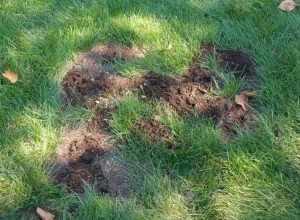
Mole Mound (Molehill)
- Circular shaped from above
- Resembles volcano from side
- Plug might not be distinct
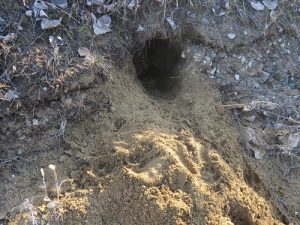
Groundhog Mound
- Crescent-shaped mount
- Fresh dirt mound in front of the main entrance
- Located near trees or fences
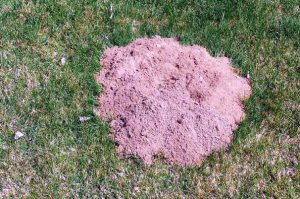
Gopher Mound
- Fresh Soil
- Crescent- or horse-shoe shaped from above
- Plugged hole
Trying to get rid of animals digging up your yard can be time and resource-intensive. It is impractical to exclude your entire yard or property from digging animals.
You need to know which entrance the animal is using and when the animal is active for effective control. You shouldn’t wait for the animal to move on. Raccoons, skunks, foxes, and opossums will use other animal burrows to den.
Trutech Wildlife Service has the tools and experience to effectively protect your yard from digging pest animals.
Categorizing Holes by Size and Physical Characteristics
The diameter of the opening is the most reliable metric for narrowing down the list of potential culprits. Measure the width of the hole at its widest point and observe the presence or absence of excavated soil around the perimeter.
1. Tiny Openings (Under 1 Inch in Diameter)
Holes of this size are typically the result of invertebrates or specialized insects. These openings are often overlooked but can indicate a high density of ground-dwelling activity.
Insects and Invertebrates
Earthworms and cicada killers are the primary sources of holes under one inch. Earthworm castings appear as small, granulated mounds of soil. If the hole is perfectly round and surrounded by a small chimney of mud, crayfish may be present if your soil is consistently saturated or near a water source.
Solitary Bees
Mining bees and digger bees create small, pencil-sized holes in areas with sparse vegetation. You will often see a tiny mound of fine soil surrounding the hole. These insects are generally non-aggressive and beneficial for pollination, though their digging can be aesthetically displeasing in concentrated areas.
2. Small to Medium Holes (1 to 3 Inches in Diameter)
This size category typically indicates the presence of small rodents or reptiles. These animals often utilize existing cracks or create well-defined entry points into the root zone.
Voles (Meadow Mice)
Voles create holes approximately 1 to 1.5 inches in diameter. They do not leave mounds of soil; instead, they create visible “runways” or paths of clipped grass that connect their various entry points. These paths look like small, worn-down highways across the surface of your lawn.
Chipmunks
Chipmunks dig clean, circular holes about 2 inches wide. Unlike many other burrowers, they carry away the excavated soil in their cheek pouches to keep the entrance hidden. Look for these holes near cover, such as rock walls, woodpiles, or house foundations.
Rats
Norway rats produce holes between 2 and 3 inches in diameter. These burrows are typically located near a food source, such as bird feeders, trash bins, or compost piles. The entrance is usually smooth from frequent use and may be accompanied by grease marks if the rat is squeezing through a tight space nearby.
Snakes
Snakes do not typically dig their own holes, but they frequently occupy abandoned rodent burrows. A hole used by a snake will often be free of spider webs and may have shed skin nearby. The diameter will correspond to the girth of the snake, usually falling within the 1 to 2-inch range.
3. Medium to Large Holes (3 to 6 Inches in Diameter)
Holes in this range are characteristic of animals that move significant amounts of earth to create subterranean living quarters or to forage for grubs.
Gophers
Pocket gophers create holes that are usually plugged with soil. You will see fan-shaped or kidney-shaped mounds of fresh earth. The actual hole is offset to one side of the mound and typically measures 3 inches in diameter. They are strictly herbivores and will target your garden’s root systems.
Moles
Moles do not typically leave open holes. Instead, they create “molehills” which are volcano-shaped mounds of loose soil. These mounds are connected by raised ridges of sod where the mole has tunneled just beneath the surface. The tunnels themselves are roughly 2 inches wide, but the surface disruption can span 5 to 6 inches.
Squirrels
Tree squirrels and ground squirrels dig shallow holes about 3 to 4 inches wide while foraging for buried nuts or bulbs. These are not usually deep burrows but rather small pits scattered across the yard. Ground squirrels, however, will create permanent burrow systems with multiple open entrances.
Skunks and Raccoons
These animals create “conical” holes rather than deep burrows. While foraging for grubs, skunks and raccoons will flip over patches of turf or dig shallow, funnel-shaped depressions about 3 to 5 inches across. This damage often appears overnight and looks as though the lawn has been roughly tilled.
4. Large Burrows (Over 6 Inches in Diameter)
Large excavations indicate powerful diggers that require significant space for nesting and protection from predators.
Groundhogs (Woodchucks)
Groundhogs are the most destructive burrowers in North America. Their entrance holes are 10 to 12 inches wide and are usually accompanied by a large “porch” of excavated dirt and gravel. They often dig these entrances against the sides of buildings or under decks for added security.
Badgers
Badgers create large, elliptical holes that are wider than they are tall. These openings can exceed 12 inches in width. Because badgers are powerful diggers, you will see massive amounts of soil and large claw marks in the earth. Their presence is usually indicated by a single, large hole in an open area.
Foxes and Coyotes
Foxes and coyotes may enlarge existing groundhog burrows to use as dens for their young. These openings are typically 12 inches or larger and are characterized by a distinct “musky” odor and the presence of prey remains (feathers, bones) near the entrance.
What Animals Dig in the Yard
Burrowing animals spend a significant portion of their lives underground. Although this predisposition for subterranean life can make for some interesting critters, homeowners generally don’t want burrowing animals on their property.
Here’s a closer look at the types of burrowing animals you may encounter. Plus, how to identify their burrows.
Prairie dogs
Prairie dogs are known to dig extensive underground tunnel systems. As social creatures, these tunnel systems can house hundreds or thousands of prairie dogs.
Typically, humans complain of the inconspicuous holes created by prairie dogs. The holes can pose a tripping hazard for humans and livestock on rangelands. Additionally, these animals tend to avail themselves of anything they find in a healthy garden.
You’ll need to look closely to spot these holes, ranging in diameter from 4 to 8 inches. The vegetation around the hole is often cleared away to create a small mound.
Groundhogs and woodchucks
These animals create burrows with openings of 10 to 12 inches in diameter. The critters can damage underground watering systems and wiring. Plus, the series of holes could lead to human injuries while working in the yard.
Beyond the underground mayhem, groundhogs are happy to eat whatever they find in your garden. In addition to the fruits and vegetables, groundhogs may eat the ornamental plants in your yard as they prepare for winter.
Gophers and pocket gophers
Gophers create burrows up to 18 inches below ground with a mainline that shoots off multiple branches. As they settle into an area, they can create a tunnel system of up to 600 feet.
Although the animal remains largely out of sight, its digging activity leaves large mounds of dirt above ground. The dirt mounds are unsightly and can lead to issues with lawn care. You will likely notice extensive damage to your garden and other landscaping features if gophers are present.
You can easily spot gopher activity if you find mounds of dirt 12 to 20 inches in diameter surrounding small holes.
Moles
Moles build extensive tunnel systems in an effort to find insects and earthworms to eat. Although the critters primarily eat bugs, they may enjoy a meal from your garden or landscape if available.
Molehills are identified by their circular and conical mounds. These mounds of soil are typically a foot wide and up to 2 inches tall. In addition to these hills, you may also spot raised tunnel tracks across your lawn.
Voles
Voles are commonly mistaken for small mice. But these critters are more capable diggers that can build large tunnel systems shrouded by dense vegetation to conceal their entrances effectively.
These little creatures can cause major damage to your yard. Specifically, these rodents can damage gardens and tree trunks. Beyond above-ground behaviors that lead to damage, these rodents can damage your lawn.
Unfortunately, it can be difficult to spot a vole hole. The entrances to their tunnel systems can be as small as a dime. The best way to spot a vole infestation is to look for vole runways, which are pathways of dirt-colored trails that lead from one hole to the next.
Armadillos
Armadillos are known for their unique appearance.
These nocturnal burrowing animals might want to move into your yard. In addition to their burrows, armadillos create small holes while foraging for food. The result of all these holes is possible foundational damage to your home.
Although you may not spot the armadillo itself during the day, you can find evidence of their presence with the holes it leaves behind. Typically, you’ll find holes of 3 inches deep and 5 inches across if an armadillo has been foraging in your yard.
Chipmunks
Chipmunks are relatively cute animals that can create massive tunnel systems around your house. Like others, these tunnel systems can lead to electrical or structural damage to your home. Plus, the chipmunks themselves may eat up the goodies in your garden.
If you have chipmunks on your property, you’ll likely hear extensive chirping to alert you to their presence. But you might have trouble spotting their burrow holes, which are only the size of a silver dollar.
Ground Squirrels
Ground squirrels are most comfortable in their underground tunnel homes, which can extend for up to 30 feet. But when not in their burrow, they can cause extensive property damage through their gnawing and seemingly unlimited appetite.
The entrance hole to their large homes is a small hole of approximately two inches in diameter. Worn grass around the entrance hole can be a sign of extensive use.
Skunks
Skunks dig holes for two reasons. They dig shallow holes looking for food and create deeper burrows to den. Their burrows can lead to structural damage to the buildings on your property.
The stink that accompanies a skunk is the best way to uncover their burrow. If you follow your nose, you’ll likely find the entrance to a burrow with freshly removed dirt. But make sure to keep your distance — these creatures can spray their foul-smelling oil up to 10 feet!
Rabbit
Rabbits create a series of tunnels called a warren. These warrens can cause structural damage to your home. But the bulk of damage caused by rabbits will be to any above-ground plants you have on your property. The critters are known to nibble on plants and ultimately destroy crops.
You’ll likely find the entrance hole to a rabbit warren on a slope or bank that allows for effective drainage. The entrance holes are typically between 4 to 6 inches in diameter. Piles of dirt and tufts of rabbit fur will often be found outside of these holes to indicate the presence of a rabbit.
Fox
Foxes are intelligent creatures with a cunning nature that seems to keep them one step ahead at all times. Typically, foxes will avoid contact with humans. But they may take the opportunity to raid your home or garbage cans for a free meal.
In some cases, foxes may construct a burrow on your property under your home or near the base of a tree. The hole can be 4 inches in diameter or larger. But the telltale sign of a fox burrow is the likely presence of feathers or bones that indicate the remains of their prey.
Raccoons
Raccoons dig while searching for food like grubs and other insects. In late fall, grubs serve as a staple to a raccoon’s diet.
Call Trutech In to Get Animals Out
Trying to get rid of animals digging up your yard can be time and resource-intensive. It is impractical to exclude your entire yard or property from digging animals.
You need to know which entrance the animal is using and when the animal is active for effective control. You shouldn’t wait for the animal to move on. Raccoons, skunks, foxes, and opossums will use other animal burrows to den.
Trutech Wildlife Service has the tools and experience to effectively protect your yard from digging pest animals.
1. What is the difference between a molehill and a gopher mound?
The easiest way to tell them apart is by looking at the shape and symmetry of the dirt mound. Moles dig perfectly round, volcano-shaped mounds because they push the dirt straight up from their vertical tunnels. You’ll also usually notice raised, spongy ridges across your lawn where they’ve been tunneling right under the surface.
Gophers, on the other hand, push dirt out at an angle, creating a distinct crescent- or horseshoe-shaped mound. Additionally, gophers will almost always plug the entrance hole with fresh soil, whereas a mole’s main vertical entry hole may remain open hidden underneath the mound.
2. What kind of animal digs a massive hole next to my porch or shed?
If you find a very large hole—roughly 10 to 12 inches wide—tucked up against your home’s foundation, a shed, a deck, or near large tree roots, you are likely dealing with a groundhog (woodchuck).
Groundhogs are excellent excavators and need deep, stable shelters to raise their young and hibernate. You will typically see a large, crescent-shaped pile of excavated dirt directly outside the main entrance. Be aware that groundhogs usually dig secondary escape tunnels too, which might be smaller and won’t have any dirt piled around them at all.
3. My yard looks like someone took a tiny golf club to it overnight. What's causing these shallow holes?
When you wake up to dozens of small, shallow, cone-shaped holes or patches of rolled-back turf, the animals aren’t looking for shelter—they are looking for breakfast.
This type of “foraging damage” is most commonly caused by skunks or raccoons. They use their sharp claws to dig up lawns in search of grubs, earthworms, and beetles. Raccoons are notorious for literally peeling back freshly laid sod like a carpet to get to the insects underneath, while skunks leave distinct, clean-cut, three- to four-inch holes.
4. What animal leaves tiny, dime-sized holes all over the grass?
If you notice small holes about the size of a dime or a quarter, and they don’t have any dirt mounds around them, you likely have voles (also known as meadow mice).
The dead giveaway for voles isn’t just the holes themselves, but the pathways connecting them. Voles create “runways”—narrow, worn-down tracks through the grass where they travel back and forth. They eat vegetation and chew on the bark of trees and shrubs, often hiding their tiny burrow openings right along these surface runways.
5. Why shouldn't I just fill the animal holes in with dirt or rocks myself?
While it’s tempting to just grab a shovel and fill the hole, it rarely solves the problem and can actually create new ones. If the animal is still inside, filling the hole can trap it, prompting it to dig an emergency escape route elsewhere—potentially causing more structural damage.
Even if the hole is currently empty, the underground tunnel system remains completely intact. Wildlife creatures are opportunistic; an empty, pre-dug burrow is prime real estate. If you don’t professionally trap the original culprit and structurally seal the area, a new pest like an opossum, skunk, or fox will move right into that vacant tunnel in no time.
6. Can I just use store-bought repellents to scare these animals away?
Unfortunately, DIY yard repellents—like mothballs, cayenne pepper, or sonic vibrating stakes—are largely ineffective for long-term control. Burrowing animals have a powerful biological drive to find food and raise their young in safe shelters, and they will easily tolerate minor annoyances to keep their home.
Successfully stopping yard damage requires specialized knowledge. A professional needs to inspect the area, determine whether the burrows are active, identify the exact species, and utilize professional-grade trapping and exclusion techniques to make sure the animals are gone for good.