
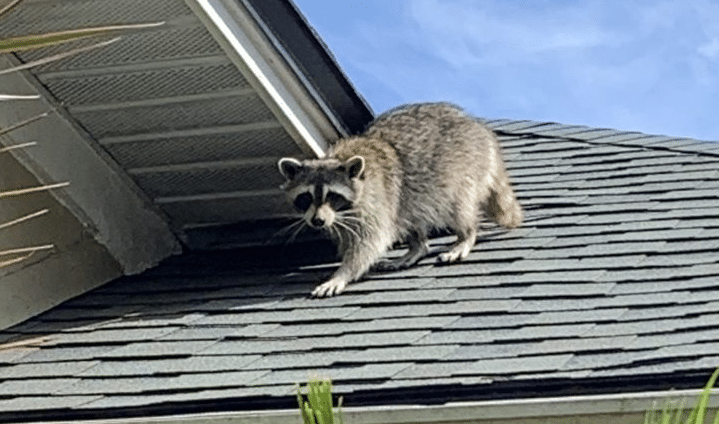
Seeing a raccoon on the roof late at night can be unsettling, especially if you start hearing movement overhead. Roof activity is often a sign that the animal is searching for food, shelter, or a way into your attic or chimney.
Raccoons are strong climbers and highly adaptable animals. Once they find an easy route onto your roof, they may keep returning to the same area until the problem is addressed.
Is a Raccoon on the Roof a Problem?
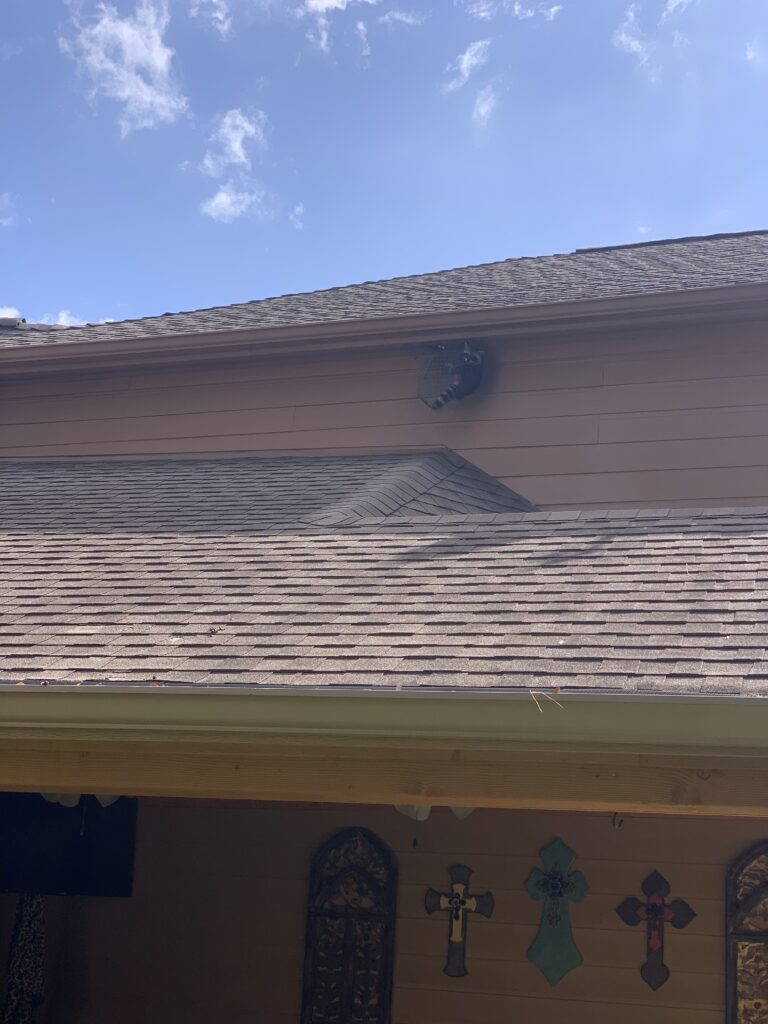
Yes, a raccoon on the roof can become a serious issue for homeowners.
Raccoons often use rooftops to look for weak spots around shingles, vents, soffits, chimneys, and roof edges. If they find an opening, they may tear through roofing materials or widen existing gaps to gain access to the attic.
Once inside, raccoons can:
- Damage insulation and ductwork
- Tear apart vents or soffits
- Leave behind droppings and strong odors
- Create noise disturbances at night
- Introduce parasites or bacteria into your home
The longer a raccoon stays around your roofline, the greater the chance it will attempt to move indoors.
How Did a Raccoon Get on My Roof?
Raccoons are excellent climbers and can access roofs more easily than many homeowners realize.
They commonly climb:
- Trees with branches near the house
- Downspouts and gutters
- Fences connected to the home
- Deck railings and trellises
- Brick or textured siding
Even a single overhanging branch can provide enough access for a raccoon to reach your roof.
Why Is a Raccoon on My Roof?
In most cases, raccoons are searching for food, warmth, or shelter.
Your roof may attract raccoons because it offers:
- Safe nesting areas away from predators
- Warm attic spaces for raising young
- Easy access to chimneys or vents
- Nearby food sources, like pet food or garbage
Female raccoons often explore rooftops during nesting season in search of den sites.
How to Get Raccoons Off the Roof
If you notice a raccoon on your roof, avoid approaching it directly. Cornered or frightened raccoons can become defensive.
Instead, you can:
- Turn on outdoor lights or make noise to encourage the raccoon to leave the area.
- Remove accessible food sources.
- Keep pets indoors
- Inspect the property for possible entry points
It is important not to trap or handle a raccoon on your own without understanding local wildlife laws and safety risks.
If the raccoon continues returning or appears to be trying to enter the home, professional wildlife removal is usually the safest solution.
Tips to Keep Raccoons Out of My Attic
Preventing access early can help you avoid larger repair problems later.
To reduce the risk:
- Trim tree branches away from the roof
- Secure trash cans with tight-fitting lids
- Repair loose soffits, vents, or shingles
- Install chimney caps
- Inspect the roof regularly for openings
Tips After a Raccoon Gets Into the Attic
If a raccoon has already entered the attic, avoid sealing the opening immediately. Raccoons may still be inside, and trapping them indoors can create additional damage and safety concerns.
Instead:
- Limit access to the attic
- Keep pets and children away from affected areas
- Avoid direct contact with droppings or nesting materials
- Listen for movement, especially at night
- Contact a wildlife professional for removal and inspection
After removal, damaged areas should be cleaned, repaired, and properly sealed to help prevent future wildlife problems.
How Can You Tell if a Raccoon Has Entered Your Attic or Chimney?

Raccoons often leave behind noticeable signs once they move into a structure.
Signs of a Raccoon in the Attic
You may notice:
- Heavy thumping or walking sounds overhead
- Noises at night or early morning
- Strong odors coming from the attic
- Torn insulation or visible damage
- Droppings near attic spaces or entry points
Raccoons are much heavier than mice or squirrels, so their movement often sounds loud and deliberate.
Signs of a Raccoon in the Chimney
Common chimney signs include:
- Scratching or crying sounds inside the fireplace
- Debris falling into the chimney
- Strong animal odors
- Vocal noises from baby raccoons
- Activity near the chimney cap
Professional Raccoon Removal
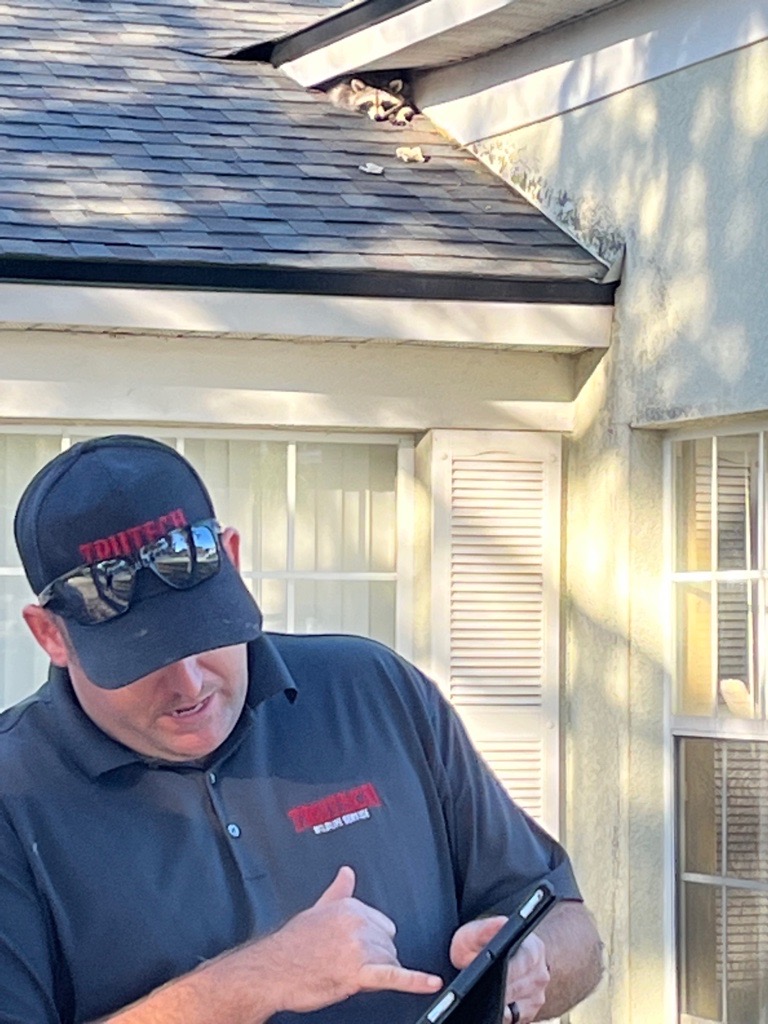
A raccoon on the roof is often an early sign that the animal is looking for a way inside. Acting quickly can help prevent attic damage, contamination, and costly repairs. Trutech Wildlife Service can safely remove the raccoon, identify entry points, and help protect your home from future wildlife problems.