

Call for Next Available Appointment. 855-854-2679

Call for Next Available Appointment855-854-2679

Call us to get started 855-854-2679

Signs of Squirrels in Your Attic

If you have noticed strange noises like scratching sounds coming from above your ceiling or seen a flurry of activity near your gutters, you are likely dealing with a squirrel. Attics provide shelter from the elements and safety from predators. While they may appear harmless outdoors, their presence inside your home poses significant risks to your property and your family’s health.

Recognizing When Squirrels Cause Problems

When and where you notice these signs can be one of the clearest indicators of a squirrel. Unlike nocturnal pests like raccoons or mice, squirrels are diurnal, meaning they are most active during the daylight hours. 

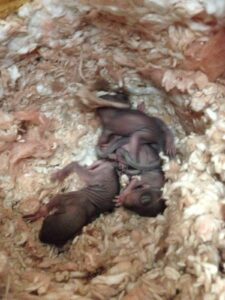
Squirrels can have two breeding seasons, once in the spring and another in the early autumn. The need to find a safe place to give birth drives squirrels into attics. 

The Most Common Signs of Squirrels

You won’t always see a squirrel darting around your attic, but you will still notice their activity. 

Squirrels are early risers. The first sign many homeowners notice is a frantic “scurrying” or “rolling” sound coming from the ceiling or wall voids. These sounds are most prevalent shortly after sunrise as the squirrels head out to forage for acorns or visit a nearby bird feeder, and again in the late afternoon as they return to sleep. Unlike the light pitter-patter of a mouse, a squirrel’s movement sounds heavy and purposeful. If you hear a persistent scratching in one specific corner, they may be attempting to expand a nesting cavity.

Do you see squirrels running along the roof ridge or balancing on your gutters? Watch their behavior carefully. If a squirrel disappears into a nook behind a fascia board or hops into a vent, you have found an active entry point. Squirrels often sit on the roof to survey their territory, so a squirrel that seems “comfortable” on your shingles is likely a resident.

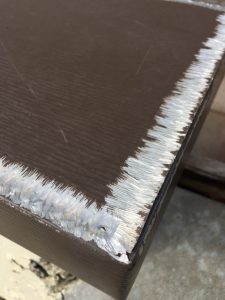
Look for “teeth scoring” or distinct bite marks on wooden rafters, support beams, and the frames of attic windows. These marks look like small, light-colored grooves in the wood. Squirrels will also chew through plastic roof vents covers and aluminum soffits to widen their access points. A hole as small as 2 inches (50 mm) in diameter is sufficient for an adult squirrel to squeeze through.

Squirrels do not sleep on bare wood. They gather materials from both inside and outside the home to create “dreys” or nests. You might find piles of shredded insulation, cardboard, dried leaves, twigs, and even pieces of fabric or shredded paper. These nests are usually tucked away in corners or behind HVAC units for maximum warmth and security.

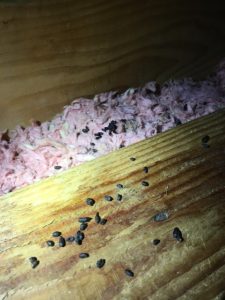
Squirrel droppings are often mistaken for rat droppings, but there are key differences. Squirrel feces are roughly 0.5 inches (12 mm) long, cylindrical, and have rounded ends. They tend to lighten in color as they age. You will typically find these scattered near the entry point or along the “runways” the squirrels use to traverse the attic. Look for dark, circular stains on the floor joists or the top of the insulation, which indicate concentrated urine deposits.

If your attic floor is dusty, you will see clear evidence of their travels. A squirrel’s front paw print is approximately 1 inch (25 mm) long with four distinct toes, while the hind print is about 2 inches (50 mm) long with five toes. These tracks often lead from the entry hole directly to the nesting site.

In the initial stages, you might not smell anything at all. However, as the infestation grows, a distinct, pungent ammonia odor will begin to drift into your living spaces. This is caused by accumulated urine. Because squirrels are creatures of habit, they often designate specific areas of your attic as “latrines.” Over time, these fluids soak into the drywall and insulation, creating a musty, organic stench that is difficult to mask with air fresheners.

Squirrels ruin insulation in two ways: through compression and contamination. By trampling through the fiberglass or cellulose, they reduce its R-value (insulating effectiveness), leading to higher energy bills. More importantly, their droppings saturate the material, creating a biohazard that must be professionally removed to ensure the air quality of your home.

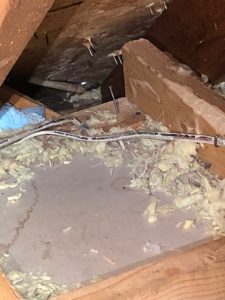
This is the single greatest risk squirrels pose to a home. They frequently strip the plastic insulation off electrical wires to use as nesting material or simply to sharpen their teeth. Exposed copper wire is a major fire hazard. According to some fire safety estimates, a significant percentage of “house fires of unknown origin” are actually caused by rodent damage to wiring.

How Do Squirrels Get Inside My Attic?

Squirrels can find cracks and crevices to either squeeze through or gnaw a larger hole.  Squirrels can gnaw through most home construction materials. 

The most common places to find a squirrel entry point:

  • Soffits
  • Fascia Boards
  • Roof Returns
  • Gable Vents
  • Roof Ridge Vents
  • Siding Corners
  • Gutters
  • Plumbing Mats

Is It Dangerous to Have a Squirrel Living in My Attic?

A squirrel infestation is more than a nuisance; it is a health concern.

Zoonotic Diseases and Parasites

While squirrels rarely carry rabies, they are primary hosts for ticks, mites, and fleas. Once the squirrels are removed, these parasites often look for a new host—potentially you or your pets. Additionally, dried squirrel droppings can harbor Salmonella or Leptospirosis, which can become airborne if the feces are disturbed during cleaning.

Allergies and Respiratory Issues

The accumulation of urine and feces can trigger asthma attacks and allergic reactions in sensitive individuals. As the air in your attic circulates through the rest of the house via “stack effect,” microscopic waste particles can contaminate the air you breathe every day.

How to Get Rid of Squirrels Humanely

Once you have confirmed their presence, the goal is to get them out and keep them out without causing unnecessary harm to the animals.

Why DIY Methods Often Fail

Many homeowners try to use mothballs, bright lights, or strobe machines. These are rarely effective long-term. Squirrels are highly adaptable; once they realize a light or smell isn’t a direct threat, they will simply ignore it. Furthermore, trapping a squirrel in a cage and releasing it miles away is often a death sentence for the animal, as it won’t know where to find food or shelter in a new territory.

Sealing the Perimeter After Exclusion

An empty attic is a “vacancy” sign for the next squirrel, making it absolutely vital to seal entry points. Once the animals are out, every potential entry point must be sealed with heavy-gauge steel hardware cloth and professional-grade sealants. This is a meticulous process that requires checking every inch of the roofline.

Call Trutech In to Get Squirrels Out

If you hear the sounds of babies, smell a rotting odor (indicating a dead animal), or see exposed wires, do not attempt a DIY fix. A professional wildlife technician possesses the safety equipment, ladders, and biological knowledge to handle the situation safely. We focus on permanent solutions that protect your home’s integrity and your family’s safety.

Latest Posts

Categories
Still Unsure What's Causing the Problem?

Use our diagnosis tool to help you understand what animal could be infesting your attic, roof, chimney, or walls.

Thank you for subscribing! We'll be in touch.