

Seeing a squirrel dart across the roof isn’t necessarily cause for concern. Squirrels regularly travel across rooftops as they move between trees, feeding areas, and potential nesting sites. However, repeated activity around the same section of the roof can indicate that squirrels are using your home for more than a convenient shortcut.
Many homeowners first become concerned when they hear noises overhead, notice squirrels running on the roof every morning, or see squirrels repeatedly visiting the same area of the roofline. In many cases, roofs serve as pathways to attics, soffits, eaves, and wall voids. Once squirrels find a suitable entry point, they may begin nesting inside the structure.
Why Do Squirrels Run Across Roofs?
Squirrels spend much of their lives above ground, moving through trees and elevated structures. Roofs often provide a convenient route between feeding areas and potential nesting sites, offering:
- Safety From Predators: Rooftops help squirrels avoid many ground-based predators while offering clear visibility and quick routes for travel.
- Access to Nesting Locations: For squirrels, a roof can be the gateway to a warm and protected nesting area. Attics, eaves, soffits, and wall voids offer shelter from weather and predators.
- Nearby Trees Create Easy Pathways: Overhanging branches frequently act as bridges to the roof, allowing squirrels to move easily between trees and structures.
- Gutters and Roof Features Provide Resources: Gutters, roof valleys, and dormers can collect nesting materials such as leaves and twigs and create sheltered areas that attract squirrels.
- Attics Offer Warmth and Shelter: Attics provide warmth, protection, and space for squirrels to nest, especially during colder weather and breeding season.
We often find squirrels using roofs as regular travel routes between feeding areas, nearby trees, and potential nesting locations. What begins as occasional roof activity can eventually lead to animals exploring vulnerable areas of the home.
How Do Squirrels Get Onto a Roof?
Squirrels can typically jump about 6 to 8 feet horizontally and may reach roofs from tree limbs, utility lines, fences, sheds, and other nearby structures. That’s not their only way up, though.
They’re capable climbers that can access your roof from multiple routes, including:
- Overhanging tree branches
- Utility wires
- Gutters and downspouts
- Climbing vines
- Fences and decks
- Adjacent garages, sheds, or other structures
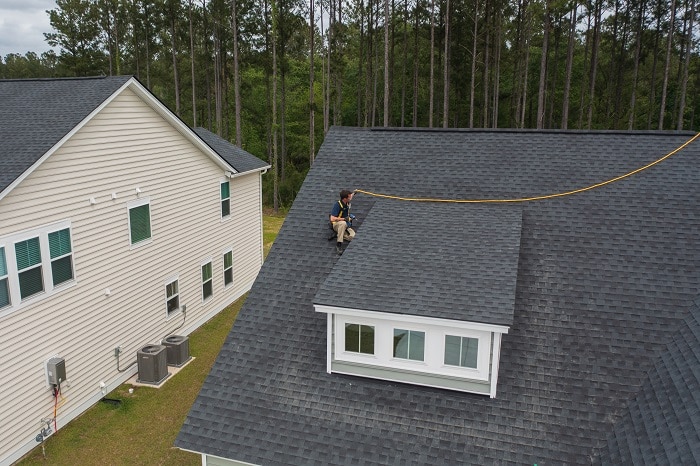
They’re capable of climbing a variety of surfaces, including wood, brick, siding, gutters, and downspouts. During our inspections, we often find squirrel activity on homes that have no tree branches directly touching the roof.
You may notice squirrels jumping on the roof from nearby tree limbs, utility wires, or adjacent structures. Their combination of climbing ability and jumping power allows them to reach areas that may appear inaccessible at first glance.
Because of this, simply trimming one branch may not eliminate access to the structure if other routes remain available.
Signs You Have Squirrels on the Roof or in the Attic
Common signs of squirrels on the roof or in the attic include:
- Scratching, scurrying, or running noises overhead, especially during the morning or daytime hours
- Gnawing sounds that may indicate squirrels are chewing on building materials or enlarging an entry point
- Repeated sightings of squirrels around the same section of the roofline
- Visible damage such as chewed fascia boards, damaged soffits, bent roof vents, or enlarged openings
- Droppings, shredded insulation, leaves, twigs, or other nesting materials in the attic
Because squirrels are active during the day, daytime noises and roof activity can help distinguish them from nocturnal wildlife such as rats or raccoons.
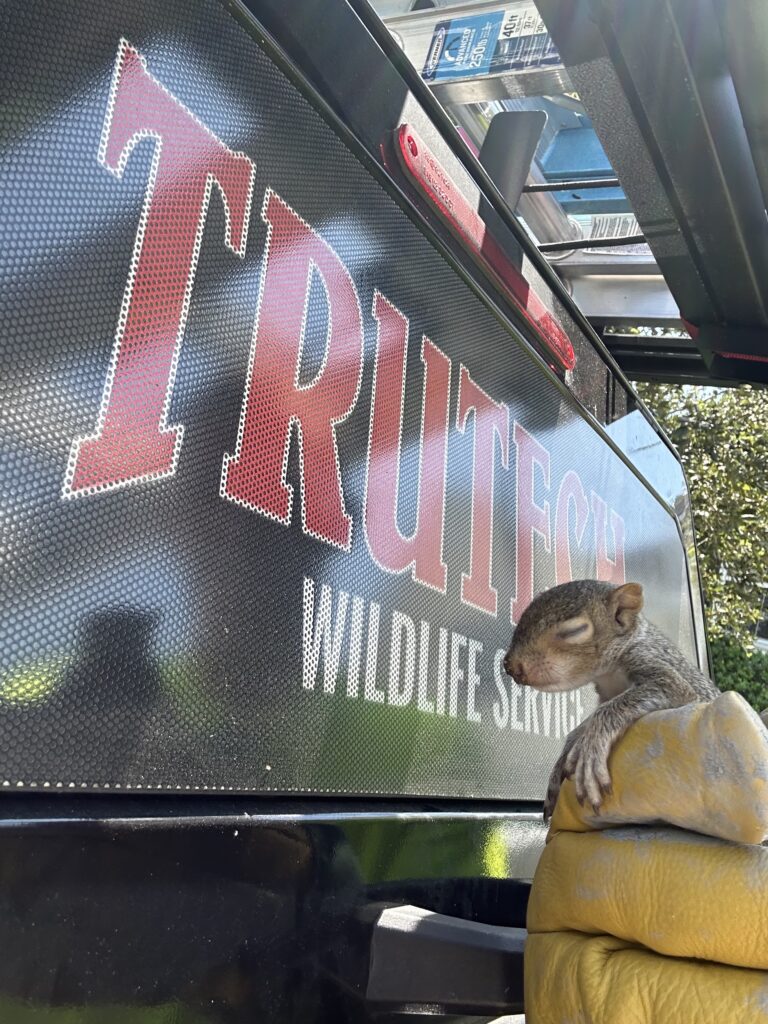
Damage Squirrels Can Cause to Your Roof
A squirrel on the roof may seem harmless at first, but repeated activity can lead to significant property damage.
Squirrels frequently chew and claw at building materials when attempting to gain access to a home.
Common examples of squirrel damage on the roof include:
- Torn or displaced shingles
- Chewed fascia boards
- Damaged soffits
- Bent roof vents
- Enlarged construction gaps
During our inspections, we frequently find evidence of chewing around roof vents, fascia boards, and other vulnerable areas. Even minor damage can create opportunities for water intrusion or provide access to attic spaces if left unaddressed.
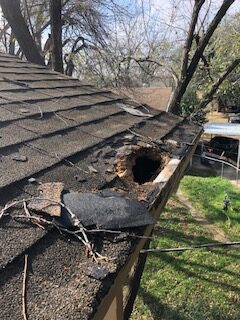
Once inside, squirrels can damage insulation by compressing it, tearing it apart for nesting material, or contaminating it with urine and droppings.
Squirrels are known for chewing on wires. Damaged electrical wiring can create serious fire hazards and may require costly repairs.
When squirrels damage roofing components, they can create openings that allow water to enter the structure. Over time, moisture intrusion can contribute to wood rot, mold growth, and additional structural damage.
Where Do Squirrels Usually Enter a House
Squirrels love to take advantage of existing weaknesses in a home’s exterior. In many cases, they enlarge small openings through persistent chewing.

Add Your Tooltip Text Here
- Roof Vents
- Soffit Vents
- Fascia Gaps
- Roof Returns
- Eaves
- Chimneys
During our inspections, damaged soffits, roof vents, and gaps along the roofline are among the most common squirrel entry points we encounter. These areas often provide the combination of accessibility and protection that squirrels look for when searching for a nesting site.
While some openings may appear too small for a squirrel to use, these animals are surprisingly persistent. Given enough time, they can enlarge vulnerable areas and create an access point large enough to enter.

How to Prevent Squirrels From Getting on Your Roof
Taking a few proactive steps can make your home less attractive and accessible to squirrels:
- Trim tree branches to maintain at least 6 to 8 feet of clearance from the roof.
- Inspect and repair damaged soffits, fascia boards, roof vents, and loose roofing materials.
- Install exclusion materials such as vent covers, hardware cloth, metal flashing, and chimney caps to protect common entry points.
- Reduce attractants by securing bird feeders, cleaning up fallen nuts and fruit, storing pet food indoors, and keeping outdoor areas clean.
Why DIY Squirrel Control Often Fails
Many homeowners attempt to solve squirrel problems on their own, but these efforts frequently address the symptoms rather than the cause.
Common mistakes include:
- Sealing holes while squirrels are still inside
- Overlooking secondary entry points
- Relying on ineffective repellents
- Ignoring nearby habitat conditions
Squirrels are intelligent animals with strong homing instincts. If they’ve successfully used a particular route or nesting site in the past, they often return repeatedly unless access is completely eliminated.
Without comprehensive exclusion work, new squirrels may simply replace the ones that were removed.
Wildlife exclusion requires an understanding of wildlife behavior. Most people do not seal all vulnerable areas or use an incorrect material.
Aaron Pollard, district manager Tweet
Professional Squirrel Removal and Exclusion
Effective squirrel control addresses both the animals and the conditions that allowed them access in the first place. Removal is important, but long-term success depends on identifying entry points, completing repairs, and preventing future access.
During an inspection, a wildlife specialist will typically:
- Perform a full roof and exterior inspection
- Identify active and potential entry points
- Confirm signs of squirrel activity
- Develop a removal strategy
- Recommend exclusion and repair measures
When Should You Call a Professional?
You should contact a wildlife professional if:
- You hear scratching or running noises in the attic.
- You see squirrels entering a hole along the roofline.
- You discover damaged soffits, fascia, or vents.
- You find droppings or nesting materials.
- Previous DIY efforts haven’t resolved the problem.
Once squirrels are removed, exclusion work helps prevent re-entry. This may include sealing access points, installing protective barriers, and addressing conditions that attract squirrels to the property. Long-term success depends on both removal and prevention. Without proper repairs and exclusion, squirrel problems often return.
Early intervention can help prevent additional damage and reduce the likelihood of a larger infestation developing inside the home. If you’re concerned about squirrel activity on your roof or in your attic, Trutech Wildlife Service can perform a professional inspection to identify entry points, assess potential damage, and recommend effective removal and exclusion solutions.
Frequently Asked Questions about Squirrels on the Roof
Are squirrels on the roof dangerous?
Squirrels generally avoid people, but they can cause significant property damage. Their chewing habits can damage roofing materials, insulation, and electrical wiring. They may also contaminate attic spaces with droppings and urine.
Why do I hear squirrels running on my roof every morning?
Squirrels are most active during daylight hours, particularly in the morning. If you regularly hear squirrels running on the roof during these times, they may be using your home as part of a travel route or accessing a nearby nesting site.
Can squirrels damage roof shingles?
Yes. Squirrels may gnaw, claw, or dislodge shingles while exploring the roof or attempting to reach an entry point. Damaged shingles can expose underlying materials to moisture, increasing the risk of leaks and other structural problems.
How do squirrels get into the attic?
Squirrels commonly enter attics through roof vents, soffit vents, fascia gaps, eaves, chimneys, and construction gaps. In many cases, they take advantage of an existing defect and then enlarge the opening through persistent chewing.
What time of day are squirrels most active on roofs?
Squirrels are diurnal, meaning they are active during the day. Activity tends to be the highest during the morning and early evening hours.
How far can squirrels jump to reach a roof?
Most squirrels can jump approximately 6 to 8 feet horizontally, though some may exceed that distance under ideal conditions. This allows them to reach roofs from nearby branches, structures, and utility lines.