






Bat Removal in Tampa
Do you need to get rid of bats in Tampa? We can help!
Bat problem in Tampa? Call for a Free Inspection
Bats in Tampa Bay
Florida is home to thirteen bat species, and all of them eat insects. One bat can consume thousands of flying insects. They provide incredible benefits to the environment and the economy; however, they cause problems when they end up in your house.
Bat infestations fall into one of two categories:
- Roosting maternity colony in the attic or on the roof
- Lone bat in the living area of a house
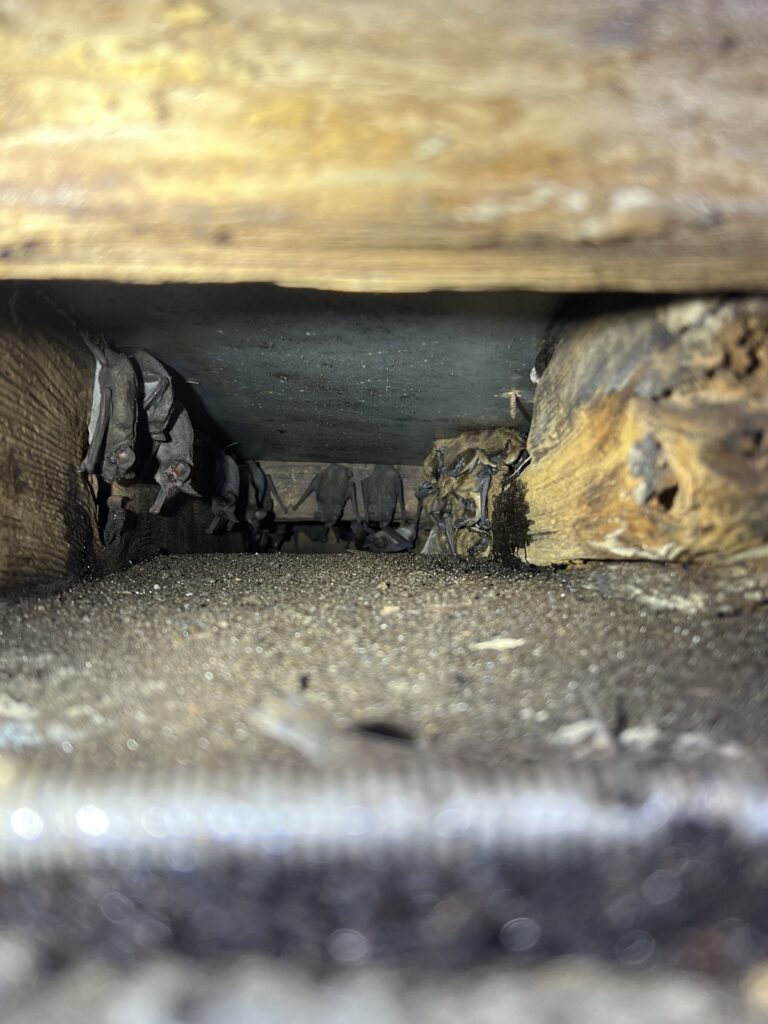
The most common bat problem is a roosting maternity colony. Bats like the Brazilian Free Tail look for safe, warm places to give birth in March and April. Bat pups are totally reliant on their mothers. It is inhumane to separate the female bats from their young before the pups can fly.
Each situation is unique. We develop a custom bat control solution depending on the type of house, the location of the infestation, the size of the bat colony, and the condition of the property.
100% Money Back Guarantee
With Trutech, your satisfaction is guaranteed. Trutech technicians take great pride in providing quality workmanship to solve your wildlife pest needs. If you are not completely satisfied, we offer a full refund upon request.
.
Free Inspection
Unsure what pest is bothering you or how to fix it? Schedule a free inspection with Trutech to uncover what animal is in your house, where they got in, and how to solve the infestation fast and effectively. Our inspections include a full report, no obligation quote, and transparent pricing.
In-House Financing
Don’t wait on a solution because of financing. Get service now and pay later.
For Trutech customers fixed rate financing through the Rollins Acceptance Company (RAC) is available.
Both standard and 90-day same as cash financing options have 12-,18-,24-, or 36-month options. Some projects might qualify for a budgeted plan up to 60 months.
Evidence of Bats in the House
Bats are nocturnal so homeowners rarely see the actual bats. The most common signs of a bat infestation are hearing bat sounds or smelling bat droppings.
- Guano. Otherwise known as bat droppings, guano will collect on your deck, windowsills, or attic floor.
- Bat noises: You’ll hear bats chirping and squeaking and scratching or rustling sounds at night or in the early morning
- Stains. Bat fur is greasy, and any small areas they’re using to enter your home will become stained, appearing black and shiany.
- Strange odors. Like many wildlife pests, bats stink, and the larger the infestation, the worse the smell. You’ll smell an ammonia-like odor from their urine.
Dangers of Bat Infestation
A bat infestation in a house can lead to a number of problems, both for the structure itself and for the health of the occupants.
- Health Risks: Rabies, Histoplasmosis, allergens, and ectoparaistes like fleas, can
- Structural Damage: Bat droppings can accumulate in attics, walls, and other areas, creating a foul odor and damaging building materials.
- Nuisances: Bats can create stains and bad odors that disrupt your daily life.
Humane Bat Removal in Tampa

Full Inspection
The most common places to find roosting bats is in attics, under shingles or eaves, and inside wall voids. Our wildlife experts look for current and potential entry points, evidence of bat activity like guano, and if flightless pups are present.

Bat Removal
During the inspection, we will identify all locations to exclude and the best place to install a bat valve.
Trapping or exterminating bats in the house is against Florida law. The most humane method for bat removal is installing a one-way bat valve. Bats can harmless leave the roost but not return.

Prevention & Control
It typically takes three to seven days to ensure all bats have evicted themselves. We seal any potential entry points, remove the bat valve, and seal that gap.

Remediation
We cleanup and remove bat guano and apply sanitization agents to affect areas. In extreme cases, we can conduct a full attic restoration. We apply treatments to the affected areas that exterminate pests like ticks, fleas, and bat bugs.

How Do Bats Get Inside My House
- Roof eaves and soffits: Gaps along these areas are prime entry points.
- Loose or damaged roof tiles/shingles: These create openings.
- Attic vents and louvers: Unprotected vents are vulnerable.
- Chimneys: Open or uncapped chimneys.
- Bathroom and dryer vents.
Roosting under on-roof solar panels
- Under loose siding.
- Cracks and crevices in walls.
- Areas where utility lines enter.
- Gaps around window and door frames.
- Damaged or torn screens.
The Most Common Bat Entry Points
- Roof Areas:
- Roof eaves and soffits: Gaps along these areas are prime entry points.
- Loose or damaged roof tiles/shingles: These create openings.
- Roof joints and flashing: Improperly sealed areas.
- Vents and Chimneys:
- Attic vents and louvers: Unprotected vents are vulnerable.
- Chimneys: Open or uncapped chimneys.
- Bathroom and dryer vents.
- Walls and Siding:
- Cracks and crevices in walls.
- Gaps in siding and fascia boards.
- Areas where utility lines enter.
- Windows and Doors:
- Gaps around window and door frames.
- Damaged or torn screens.
- Utility Access Points:
- Openings around plumbing pipes.
- Gaps where electrical or cable wires enter.
- Structural Deficiencies:
- Deteriorating wood that creates holes.
- Any general cracks or holes in the buildings exterior.
Bats in Attic Removal
Attics offer the warmth, humidity, and shelter necessary for rearing young pups.
Bats gain access to attics through gaps in roof shingles, mortar, windows, doors, and home ventilation systems. Gable vents are a common bat entry point into the attic.
Excluder valves or exclusion tubes are a one-way exit, allowing bats in the attic to leave but not to return. The process typically takes three to seven days to ensure all bats are out. After a final attic inspection, we remove the valve and seal the final exit point.
Bats in Wall Removal
After gaining access to an attic, bats can make their way behind walls. These spaces provide darkness and seclusion bats seek out.
It is especially important to call the professionals to get rid of bats inside the wall. A bat inside the walls may become stuck. This is especially common for young bats, which have not yet mastered flying. If left alone, trapped bats often starve and die in wall voids.
Bats in Chimney Removal
Chimneys provide easy access entry points for bats. You can hear bats make high-pitched squeaks in chimneys. If you find bats in the chimney, do not open the flue or try to smoke out the animals. At Trutch, we get rid of bats from chimneys by installing an a one-way exit and sealing the chimney with mesh screens or chimney caps.
Bats in Florida
Bats are found in nearly every geographic region in Florida. Favorite environments include tropical forests, woodlands, open fields, both suburban and urban communities, and even deserts. Roosting requirements usually depend on the species, but caves, trees, hollowed logs, rock crevices, and human dwellings serve as excellent habitats.
In the state of Florida, not only is it illegal to kill or trap bats, but you cannot evict bats from your home if flightless pups are present.
Bat maternity colonies begin to form in early April. These roosts are frequently near areas prone to insect swarms such as fields, ponds, or neighborhoods. In the late spring or summer, homeowners who see bats leaving an attic or overhang at twilight may need to check for an infestation. If you need bat removal in Tampa between April 15 and August 15, you need a special permit to install bat exclusions.
Areas We Service
Bat Control Services Near You
Our team of experts has spent over 40 years developing and training to provide exceptional wildlife removal and pest control services in Tampa. When you work with Trutech, you can feel confident that the job is being done right.
- Apollo Beach
- Brandon
- Bloomingdale
- Clearwater
- Citrus Park
- Dover
- Hunters Green
- Hyde Creek
- Largo
- Lutz
- New Port Richey
- Oldsmar
- Riverview
- Pebble Creek
- Sheffner
- Temple Terrace
- Town 'N' Country
- Wesley Chapen
- Zephyrhills
Why Chose Trutech Wildlife Service
- Guaranteed services
- Over 40 years of experience
- Licenses & insured experts
- Financing available
At Trutech Wildlife Service, we pride ourselves on offering humane raccoon removal services that prioritize the safety of you and your family, your property, and the animal.
Our team of experienced and certified technicians uses humane and eco-friendly methods to ensure a safe and effective removal process. We provide a comprehensive service that includes thorough inspection, humane removal, meticulous damage repair, and proactive prevention measures.
When you choose Trutech Wildlife Service, you can trust that we will handle your raccoon problem with the utmost professionalism and care, giving you peace of mind and a raccoon-free home. Contact us today for a free quote and let us help you reclaim your space.
Bat problem in Tampa? Call for a Free Inspection
Frequently Asked Questions
Pets are the most likely member of the household to be bitten by a rabid bat, as they are exposed to the risk of infection outdoors and can’t communicate being bitten or feeling ill. However, as one of the primary carriers of rabies in the U.S., bats should be a concern for people as well. When homes are infested, the chances of bat bites on humans are far higher. Sleeping residents can suffer bat bites as can those trying to shoo a trapped bat out of the house. A difficult disease to identify, rabies doesn’t present symptoms for several months. By the time signs like severe fatigue, muscle weakness, and nausea emerge, the deadly disease has often progressed too far to be cured.
Bats are beneficial due to their insect-eating habits, but a quick encounter with them can bring lethal consequences. Immunizations that help prevent rabies are recommended for anyone in an area with high insect activity. Due to the painless nature of bat bites, those who have been near these pests are advised to receive cautionary treatment from a physician. Keep in mind that symptoms typically associated with rabies, such as mouth foaming, aggressiveness, and hydrophobia, are rarely present in humans, so any bite should be treated as a potential threat. When bats are observed in the home, attic, or garage, leave the removal risks to the experts at Trutech.
Unless there is a large number of bats in the attic, infestations can continue for a long time without being noticed by homeowners. Look for the winged animals leaving the attic at dusk and returning sometime during the pre-dawn hours. They can also be detected by noticing stains on exterior walls caused by bat excrement. Inside the house, the smell of guano can become noticeable over time. Large infestations of bats in the attic can deposit enough guano to make the ceiling sag and eventually collapse.
Notoriously nocturnal, bats are also shy creatures that can become expert hiders once in the home. However, bats in the home are largely just accidental occurrences. A single bat can fly into a home without realizing it (despite many incursions pointing to maternal roosting). Homeowners should utilize a variety of methods to verify bat infestations. For one, bats emit high-pitched squeaks and scratching sounds commonly heard in the evening. Bat droppings also tend to accumulate under where the animals roost. Similar in appearance to rodent droppings, bat feces has a pungent odor and appears shiny due to the animals’ diet of insects.
Bats leave plenty of evidence for property owners. For one, seeing the animal flying around treetops and into trees directly tends to be the most common sign. Such behavior occurs in the evening, which makes sighting bats difficult. In such cases, finding bat droppings at the base of a tree is a sure way to know that at least one of the animals is roosting on your property. Noticing missing or damaged bark can also be a sign that bats in trees are present.
Positively identifying what kind of animal is living within the walls is important to begin removal. Bats make high-pitched squeaks, which are employed to find insects and heard mostly during the night. Various scratching and other movements may be heard from walls, as well. If droppings are present, residents should look for dark, greasy scat with visible insect body parts. As finding bat guano within walls can prove difficult, it is wise to check other popular bat hangouts like house eaves and attics.
The only way to permanently keep bats away is with a full exclusion done to the home. This will consist of screening gable end vents, sealing behind fascia board along eaves, sealing construction gaps, sealing dormer corners, sealing ridge caps, and any other areas that will allow a bat to enter into the home. If bats are currently present, a bat valve will be installed which is a one-way door that allows the bats to easily leave the home but does not allow them to get back in. Once all bats have left through the bat valve, it may then be removed and permanently sealed. As for sound machines and repellents, no. Although it may seem that it rustles the bats at first, it is simply the activity of your presence. The bats will soon settle down and continue to roost in that area. If there is a food source present in an area, bats will stay put.
This is something we deal with on a regular basis. If you have this significant of guano buildup, we suggest letting us inspect your property for any other potential entry points. When the bats are evicted from the vent, they will naturally look for another way into their — or in this case, your — home. Also. while you may not see bats in the attic or home, you are not necessarily in the clear. The urine and guano of bats are very corrosive and can deteriorate the bottom of gable vents. Eventually the vent will rot and bats will inhabit the space between the walls and brick, siding, or rock. Don’t procrastinate, as guano can build up fast inside these voids. This not only causes the health risks you hear about but can attract other bats for years to come.