

Armadillos
Armadillo Information
Nine-banded armadillos thrive in warmer regions across the United States, especially in Texas, the Southeast, and the Southwest. A key characteristic of armadillo habitat is the presence of soft soil, cover from predators, and abundant insects, which allows them to dig burrows and forage efficiently
They are known for their hard, scaled armor that covers their bodies from head to tail. Because the bony plates offer little insulation, armadillos are susceptible to prolonged cold temperatures. They cannot survive prolonged exposure to temperatures below 17 degrees Fahrenheit.
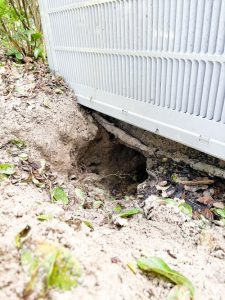
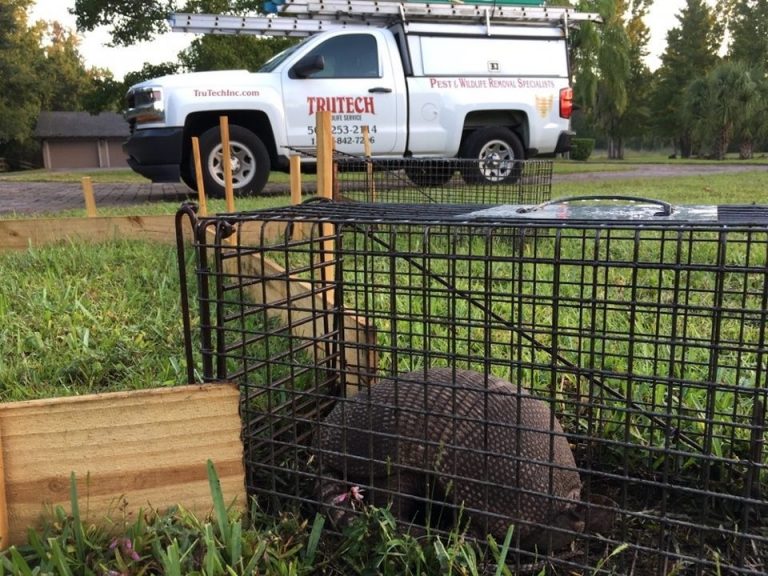
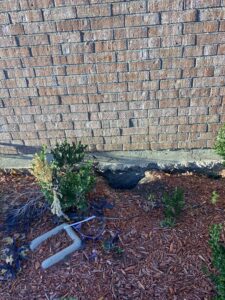
These unique creatures are generally harmless to you, but they can wreak havoc on your yards and lawns by digging near your house’s foundation or destroying your garden. If you’ve seen a burrow or damage on your property caused by one of these animals, it’s time to call the wildlife experts at Trutech to conduct a humane armadillo removal.

What Does an Armadillos Look Like?
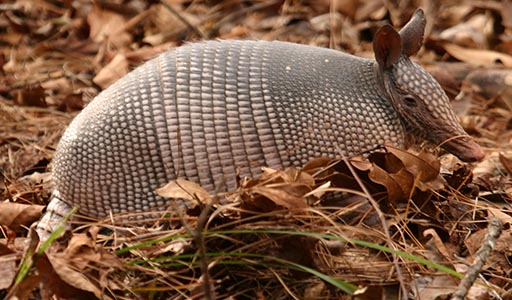
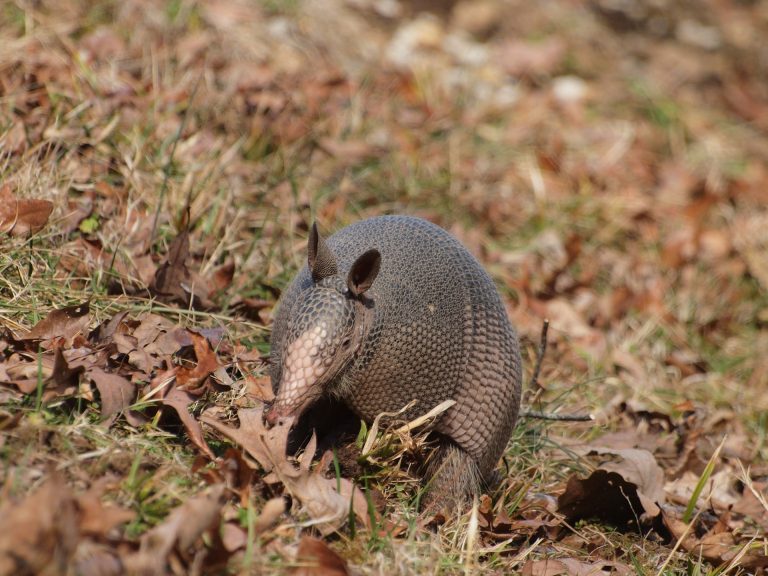
Armadillos are unique among mammals because they have tan, bony shells that protect them like suits of armor. About the size of a large house cat, these animals can weigh between 10 and 15 pounds. The stubby legs of armadillos are tipped with long claws, which make them excellent diggers and climbers. The creatures can run swiftly despite their appearance and are also capable swimmers. Armadillos have pointed snouts and beady eyes, resulting in poor eyesight that they compensate for with a keen sense of smell.

What Do Armadillos Eat?
Much like their relatives, the anteaters, armadillos' diet mainly consists of insects, but fruit and carrion can be a part of their diet when available. They use their long tongues to lick up invertebrates such as ants and termites in their nests. Other staples to their diet include beetles, spiders, worms, and grubs. Occasionally, armadillos eat small frogs, lizards, snakes, or eggs.

Where Do Armadillos Live?
They thrive in warm, humid environments and are most commonly found across the Southeast, South Central states, and parts of the Midwest. Their natural habitat includes woodlands, grasslands, pastures, and brush fields near water sources. They typically live in areas with loose, well-drained soil. When living near people, armadillos often live in landscaped yards, golf courses, parks, greenbelts, and burrow beneath decks, sheds, and outbuildings.
Armadillo Activity
Armadillos are nocturnal and spend most of their time foraging for food or digging burrows. They can sleep up to 16 hours a day and emerge at twilight to forage.
They forage for food by digging shallow cone-shaped holes. These holes are often 1 to 3 inches deep. During foraging, an armadillo typically keeps its nose close to the ground, stopping frequently to sniff and dig. They can dig dozens of holes a night across multiple backyards or acres of habitat. It is the most obvious sign of armadillo activity on your property.
The animals dig burrows with their powerful claws and sleep for up to 16 hours a day, emerging during twilight to search for food. Armadillos dig several burrows around their nests to escape predators. Burrows are usually located in loose, sandy soils, and entrances are strategically placed in the shelter of rocks, dense shrubs, or trees.
Armadillo Life Cycle
Gestation is anywhere from two to five months, but the nine-banded armadillo can have delayed implantation. Young are typically born between February and May. Female armadillos burrow deep into the soil and create nests before giving birth to litters of four identical quadruplets.
Baby armadillos, called pups, are born with their eyes open. Young armadillos can walk within a few hours, but their armored shells take a few weeks to harden. Two to four months into the armadillo life cycle, the mother will wean her pups. They typically stay with her and forage alongside their siblings until the summer mating season begins.
Baby Armadillo Damage
A female armadillo often uproots flowers and other foliage to disguise the entrance to her nest. This keeps burrows hidden and ensures that baby armadillos are safe inside.
Both the mother and baby armadillos search for grubs in yards and tear up turf in the process. Because gardens are well watered and have plenty of insects, they are a favorite target. The pests also dig burrows and underground dens.
Armadillos and Leprosy
Can you get leprosy from armadillos?
It’s a quirk of genetics that humans and nine-banded armadillos (Dasypus novemcinctus) are the only two mammals capable of carrying leprosy. Heightened awareness of the links between armadillos and leprosy has shed new light on the dangers of zoonotic diseases, which pass between species.
Connecting armadillos and leprosy
A specific aspect of armadillo anatomy makes these pests a good carrier for leprosy. The bacteria that causes the ailment, also known as Hansen’s Disease, needs just the right conditions to thrive. Scientists theorize that armadillos’ low, 90 degree body temperature makes them an ideal living Petri dish. As a result, leprosy has become the most feared armadillo disease.
Preventing transmission
The easiest way to avoid armadillo diseases like leprosy is to simply stay away from the animals. Luckily, with their heavily armored bodies, they’re easy to spot. In some parts of the country, armadillos are hunted for sport or even eaten as a delicacy. Obviously, these activities must also be halted to avoid exposure to armadillo leprosy. The disease typically requires long-term or repeated contact for transmission, so armadillo infestations should not be ignored. If these pests are encroaching on residential property, the experts at Trutech can provide safe removal to eliminate the threat.

All About Armadillos in Jacksonville
Armadillos are naturally armored barrel-shaped critters. Their exterior is made of gray or brown overlapping plates that protect them from predators. Armadillos have short legs,
How to Get Rid of Armadillos
Nine-banded armadillos thrive in warmer regions across the United States, especially in the southeast and Southwest. They are known for their hard-scaled armor and clawed
Frequently Asked Questions
Do armadillos bite?
A scared armadillo usually jumps in the air to distract predators or runs away. When facing a human, it is not likely that the pest will bite. Armadillos have small, peg-like teeth that do not usually cause injury.
Can armadillos swim?
Armadillos can swim despite the density of their bony armor. They can inflate their stomach and intestines to increase their buoyancy.
What diseases do armadillos carry?
While armadillos can carry rabies or leprosy, the number of human cases caused by these pests isunknown. Both diseases transfer through direct contact with infected wildlife or people, so it’s best to avoid touching armadillos.
Where do you often find armadillo droppings?
Armadillo droppings create issues for homeowners in yards, as they not only smell bad but are easily stepped on and difficult to clean up. Feces are often scattered near backyard burrowing sites or around ditches with damp soil. When identifying armadillo scat, look for small groups of inch-long, brown pellets.
What are common armadillo repellents?
Several types of armadillo deterrents claim to keep these pests away. Home remedies like cayenne pepper, mothballs, and castor oil are popular, but they do not always work.
In addition, some of these armadillo repellents can harm other wildlife. Mothballs are toxic to many animals, and peppers hot enough to repel armadillos may also hurt pets.
To deter armadillos, homeowners need to find out why these animals are on the property. Most pests prefer to build burrows in safe areas near food sources. As a result, control lawn grubs and insects to make yards less attractive to armadillos.
The surest armadillo deterrent is a visit from the experts at Trutech. Pest professionals can help residents get rid of armadillos and prevent future issues.
A scared armadillo usually jumps in the air to distract predators or runs away. When facing a human, it is not likely that the pest will bite. Armadillos have small, peg-like teeth that do not usually cause injury.
While armadillos can carry rabies or leprosy, the number of human cases caused by these pests isunknown. Both diseases transfer through direct contact with infected wildlife or people, so it’s best to avoid touching armadillos.
Armadillo droppings create issues for homeowners in yards, as they not only smell bad but are easily stepped on and difficult to clean up. Feces are often scattered near backyard burrowing sites or around ditches with damp soil. When identifying armadillo scat, look for small groups of inch-long, brown pellets.
Several types of armadillo deterrents claim to keep these pests away. Home remedies like cayenne pepper, mothballs, and castor oil are popular, but they do not always work.
In addition, some of these armadillo repellents can harm other wildlife. Mothballs are toxic to many animals, and peppers hot enough to repel armadillos may also hurt pets.
To deter armadillos, homeowners need to find out why these animals are on the property. Most pests prefer to build burrows in safe areas near food sources. As a result, control lawn grubs and insects to make yards less attractive to armadillos.
The surest armadillo deterrent is a visit from the experts at Trutech. Pest professionals can help residents get rid of armadillos and prevent future issues.